Drug Information Salvia Divinorum
on this page
What is Salvia?
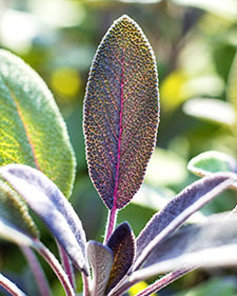
Salvia is an herb that is smoked, chewed or ingested in different forms, that produces a hallucinogenic high. It’s a drug that has not yet attracted enough attention to be made illegal in many states and countries. In the US, the laws vary from state to state. In twenty states, it is illegal. In a few more, it is illegal to have it with the intention of consuming it. In California, it can legally be sold to an adult but it is illegal to sell it to a minor.
Records of Use
For some reason, it is a very popular activity to video a person’s salvia trip and post it to YouTube—especially their first-ever trip. There are thousands of salvia trips posted. In general, they show a young person who smokes salvia from some type of bowl or pipe and very quickly becomes giddy, maniacal and out of control. Nearly all of them begin to laugh continuously, unable to stop themselves. Many roll onto the floor and lie there helplessly. Others stumble around the room or outdoor space. Some complain that the trip was too intense, some have to be controlled by their companions who did not smoke the herb.
The most intense parts of the trips are usually very short—many of these videos show the person calming down within five minutes or so. The effects set in within just seconds to a minute. The full effects last about half an hour though there may be some lingering after-effects.
Fortunately, not everyone thinks these trips are fun so for some of these people, their first trips are their last.
Despite the fact that these people are out of control and helpless, most states have not yet outlawed this drug. It can be easily purchased on the internet.

Get the information about Drugs that may help you prevent a disaster for your or your loved one.
DOWNLOAD NOWReports on Salvia
Twenty-seven states have shifted this drug from legal status to banned because of severe problems that have resulted from its use. Most well-known damaging effect of using salvia was the death of Brett Chidester in Delaware. After this young man smoked salvia weekly for several months, he asphyxiated himself in 2006. When his car was searched, salvia was found.
In 2011, another young man killed himself after smoking salvia. In New York City, 21-year-old Ryan Santanna jumped off a 15th-floor balcony a few minutes after smoking salvia with his girlfriend.
Intense, Short LSD Trip?
There is so little scientific, analytical information that even researchers and legislators have had to rely on anecdotal information on the effects of the drug. One third-year college study who abused the drug said: “My whole perspective got sucked out of my own body and thrown into my friend. I became my friend. It was uncomfortable as if I was getting pulled out and sliced into him. Like I was getting cut as if I was playdough or clay and I was getting shaken violently.”
Salvia has been compared by many to LSD. It can be just as intense and convincing but is much shorter.
On its addictiveness, here, too it is difficult to make a judgment without reliable scientific information. Brett Chidester was reported to have said that he could not stop smoking the drug. Like LSD, it is possible that even if a person is not physically addicted to the drug, he could become dependent on its effects in other ways. He could rely on the drug to deal with unpleasant parts of life or depend on it to change his reality of the world. These habits could become drug dependencies. Without being helped with a rehabilitation program, it’s possible that a salvia user could remain addicted in this way.
Dangers for Youth Seeking a Legal High
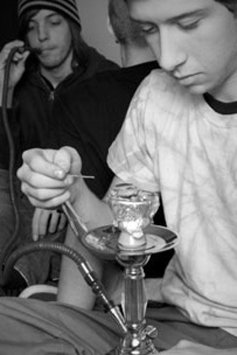
If young people are looking for a way to get extremely high without legal repercussions in most states, they may choose salvia. There are hundreds of websites offering to sell this drug. The products sold are often enhanced or bumped up in potency by adding salvia concentrates to the plain salvia leaves. This strengthened product may be referred to as “fortified” salvia.
The strength of these fortified products is identified by a 1X, 2X, 3X and so on up to 60X. There are “starter packs” sold to new customers that contain a range of products such as one gram of 5X, one gram of 10X and one gram of 20X - the last is “to experience extreme effects.” The product may also be flavored with apple, mint or strawberry. A starter pack like this may sell for $80.
While most people seem to smoke these fortified leaves, there are also extracts of various types that can be consumed. Some are meant to be placed under the tongue and absorbed.
Brett’s Law in Delaware
One of the early laws banning this product was Brett’s Law or SB259 in Delaware. In 2006, seventeen-year-old Brett Chidester killed himself after buying and smoking salvia. He assured his mother that the product was harmless because it was legal. His girlfriend reported that he had been smoking salvia once or twice a week for the seven months before his death.
Brett’s mother Kathleen was an early campaigner against this drug and was instrumental in getting SB 259 passed in Delaware, banning the sale of the drug. His mother also reported that Brett had said that he could not stop himself from smoking the drug.
Is Salvia Addictive or Not?
Salvia has not been the subject of much study as yet so there is no definitive information yet on its addictiveness. It is likely that the drug creates a psychological dependence that drives a user to find and consume the drug again and again, despite the harm that may result. When this happens, a person needs rehab to recover from this type of addiction.
At Narconon drug and alcohol rehabilitation centers, recovery from addiction to hallucinogens happens every day, the same as it does with addiction to prescription painkillers, alcohol or other drugs. The same therapy enables any person to recover.
The Narconon program not only addresses the debilitating effects of drug abuse on the mind and body but also resolves why a person turned to drugs in the first place. As a result, a person can graduate from the program into a new life free from drug use.
Recovering from Salvia Abuse and Addiction
There are both physical and mental recoveries needed after a person has become dependent on a drug. He (or she) must clean up the effects of the drug on the body. Every drug leaves residues behind, trapped in fatty tissues of the body. Even years later, these residues can have a negative effect on a person’s outlook or decisions—sometimes even creating flashbacks as with LSD, PCP or other drug use. When a person goes through the Narconon drug and alcohol rehabilitation program, one phase of recovery utilizes sauna time, a strict nutritional regimen and moderate daily exercise to enable the body to flush out these residues. As the residues leave, a person regains the brightness that is naturally his without the lingering influence of past drugs.
What must happen then is that a person must learn to live a productive, enjoyable life again. There are specific barriers that must be removed, for example, a person must regain self-respect. He must learn how to find relief from the guilt of the past and know how to overcome problems or setbacks in the future.
There are many small steps that make up a complete recovery from addiction. Narconon programs around the world have been helping people take these steps, one after another, for five decades. Find out how these steps can help someone you care about make it all the way back to lasting sobriety.
 ) on our articles for the most up-to-date and accurate information.