It’s not difficult to pick up on the controversy swirling around the use of the opioid antidote naloxone. Some people see value in saving the lives of those who overdose. Others think that these people who seem to be trying so hard to die should be left...
As we work to solve America’s problems with drug addiction and overdoses, there’s an intense focus on opioids alone. Letting ourselves develop this kind of tunnel vision could result in our overlooking some truly vital aspects of our nation’s problems...
There’s one simple fact that is more important than all others on the subject of our opioid epidemic…
As our nation suffers from the single worst opiate epidemic that it has ever faced, the American people are practically in a mad state looking for solutions to the problem. The Centers for Disease Control and Prevention specified that the problem took...
You might think the great farms in America’s heartlands are the last places that drug addiction or overdose deaths would be problems. A recent survey of rural communities proves that even these areas have been infiltrated.
How did America get to the point of losing 64,000 Americans to drug overdoses in one year? We’ve traveled a long road to get to this point and in truth, most people haven’t even noticed the journey.
New evidence compiled by the Centers for Disease Control and Prevention reveals that we do not yet have the opioid epidemic or the loss of life from drug overdoses under control yet. We’re not even close.
Let’s take a look at an ideal world—a world where drugs are only given when they are truly needed to improve health, where there is no undue or skewed influence causing patients to ask for specific types of medication, where doctors use nothing but...
When doctors prescribe any drug, it should only be done to improve a patient’s health, right? Over the last few decades, prescribing practices have begun to be influenced too heavily by the wrong parties. Millions of Americans have suffered as a result.
Most Americans know we’re in the midst of a deadly opioid epidemic. But few realize that control of the rate and volume of prescribing addictive painkillers has moved into the wrong hands. Get educated now on this vital topic.
In 2012, the Senate Finance Committee opened an investigation that could have revealed a hidden influence contributing to the loss of thousands of American lives. IF the report on this investigation had ever been published.
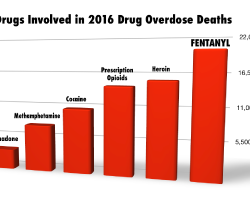
Fentanyl as a painkiller is not new but as an illicit drug pervading the American drug market, it is a threat that’s only a few years old. And a deadly, deadly threat it is, too…
Some businesses with public restrooms are installing intense blue lights to prevent overdoses because they make it hard for drug users to locate their blue veins. How much will this measure help prevent overdoses?
On November 9, 2017, California Governor Jerry Brown signed AB 1048 Health care: Pain Management and Schedule II Drug Prescriptions into law. The two provisions of this law were simple but indicate a major shift in attitudes toward prescribing opioid painkillers.
Arkansas is a very rural state with widely scattered population centers. These remote areas permit the infiltration of Mexican drug cartels who bring addictive, deadly substances into the state.
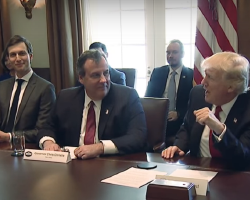
On October 26, 2017, President Trump formally declared the nation’s opioid epidemic to be public health emergency and directed agencies and resources to overcome this tragic situation.
A new analysis of prescribing patterns for opioid painkillers revealed that three-quarters of these pills go to just 10% of patients. Might a careful analysis of the needs of this small group help curb overprescribing?
There’s been a lot of talk about declaring a national emergency to direct resources toward overcoming our epidemic of opioid overdose deaths. Do the events of the last couple of years really warrant this declare? See what you think.
In the last few years, the massive role pharmaceutical companies played in increasing the U.S. rate of addiction has been revealed. Is it time to hold these huge corporations responsible for their misdeeds?
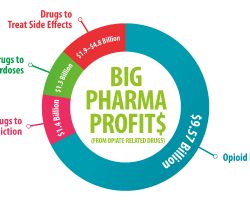
For a mother of a person struggling with opioid addiction, there’s only one motivation: Saving her child’s life. For a number of pharmaceutical companies, there's an entirely different motivation: Raking in billions in profits from drugs that are more...