A new analysis of prescribing patterns for opioid painkillers revealed that three-quarters of these pills go to just 10% of patients. Might a careful analysis of the needs of this small group help curb overprescribing?
There’s been a lot of talk about declaring a national emergency to direct resources toward overcoming our epidemic of opioid overdose deaths. Do the events of the last couple of years really warrant this declare? See what you think.
In the last few years, the massive role pharmaceutical companies played in increasing the U.S. rate of addiction has been revealed. Is it time to hold these huge corporations responsible for their misdeeds?
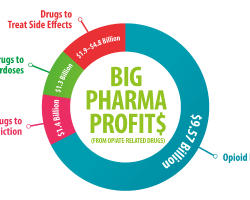
For a mother of a person struggling with opioid addiction, there’s only one motivation: Saving her child’s life. For a number of pharmaceutical companies, there's an entirely different motivation: Raking in billions in profits from drugs that are more...
In the last few weeks, two major companies have published estimates and predictions of the number of Americans who will be lost to lose to drug overdoses. But both estimates seem to miss a piece of that big picture.
In 2015, we lost 44,000 people to overdoses. But if we knew how many had been saved with naloxone, we would truly know the full extent of our crisis of opioid addiction and overdose.
A new article released by STAT shines a harsh light on the reality of the opioid epidemic in America. Drug overdoses already kill more Americans under age 50 than anything else. There are now nearly 100 deaths each day from opioids—that number could...
After months of dedicated work by the U.S. Drug Enforcement Administration, the Chinese government has banned the production of four highly dangerous synthetic opioids. Learn why this may not make things much better in the U.S.
In Part I of this series, we looked at the emergence of an opioid epidemic in the U.S. that was fueled by the overprescribing of painkillers by doctors in every corner of the country. Now it looks like this problem may soon take on global proportions.
Over the last several years, hundreds of thousands of American families have suffered the heartbreak of losing someone they love to a drug overdose. Now, it appears that this scourge may begin to wreak a similar havoc in other countries as pharmaceutical...
When your work is helping the addicted recover their sobriety, today’s newspapers and magazines don’t bring you a lot of good news. There are warnings of drugs currently taking lives, drug use trends to tell us where we need improvement. Here’s what...
A new study reveals the rapidly increasing number of newborns struggling with sickness and discomfort when they are no longer exposed to the opioids their mothers were consuming.
When it comes to heroin and painkiller addiction and overdoses, the Northeast United States has been very hard hit. In Hackensack, New Jersey, the Bergen County Prosecutor’s Office (BCPO) decided to fight back using social media tools.
A look back through history shows that patterns of drug abuse in the U.S. never stay the same for long. In the 1950s, tranquilizers like Miltowns and plenty of alcohol were being abused. In the 1960s, it was marijuana, speed, and hallucinogens like LSD.
Heroin is making a major comeback, and it has spread to the suburbs and become common in communities throughout the U.S. and across all socioeconomic strata. The reason for this is tied closely to the news that prescription drug abuse is on the decline.
Over the course of the past few years, we have seen an explosion in the rate at which doctors in the United States are prescribing prescription painkillers.
It seems like everywhere you look these days, there’s news about opioids. This is both good and bad. It’s bad because this means there are so many opioids in circulation that people need to be notified that there’s a problem.
Heroin used to be a drug that was mostly associated with the inner city or with groups on the fringes of society. Now, heroin is increasingly becoming a drug that can be found in the residential communities that so many of the families in this country...
In many ways, 2014 is shaping up to be a year that will to a large degree be shaped by drugs. The past many decades have seen major societal changes which had their source in drug use trends or which were largely influenced by drugs.
In the ongoing battle to put an end to drug abuse in our culture, it often appears that as soon as you put out one fire, another one springs up in another place. As prescription opioid abuse decreases in some areas, heroin moves in to replace it.