Signs and Symptoms of Marijuana Use

Around the world, an estimated 244 million people use marijuana (cannabis) each year. In the U.S. alone, more than 64 million Americans of any age have consumed this drug in the past year. This number increased by 11 million in just three years. More than one-quarter of high school seniors have used marijuana in the past year.
While not everyone who uses marijuana will become addicted, there are other types of potential harm associated with its use. Learning to spot the signs of use, especially when someone appears to be struggling, can alert you to potential danger before it becomes worse.
Since marijuana is used by so many young people, parents may struggle to identify drug problems or the onset of addiction in their children. It’s important to be able to detect signs of marijuana use as soon as they happen.
Mixing Marijuana with Other Drugs
Many people combine the use of marijuana with other drugs. They sometimes follow specific formulas, trying to create a particular high that they’ve been told can result from that combination. The primary drugs being mixed with marijuana are alcohol, opiates (heroin or prescription painkillers), methamphetamine, and cocaine. Mixing marijuana with other substances can make it harder to identify which drugs are being used.
The Many Kinds of Cannabis Products
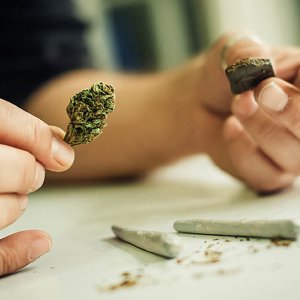
The leafy plant called marijuana comes from the cannabis plant. Marijuana or weed is typically sold and consumed as a compact cannabis flower that contains enough THC or tetrahydrocannabinol to cause the user to feel its effects. THC is the most psychoactive component of the plant. In other words, it is the part of the drug that has the strongest effect on the mind.
Cannabis products are sold in many different forms, and each has its own nickname.
- Compact cannabis flowers are often called buds or nugs
- Blocks of hard resin called hash or hashish
- Hash oil that results from extracting the plant’s resins with butane or other chemicals
- Crumble, a dry product that results from further processing of hash oil
- Shatter, an amber, glass-like product that can be smoked
- Bubble hash, which is a crumbly, powdery mass
- Kief, a powdery material that results from collecting the resins that fall from the flowers and pass through very fine screens
- Wax, which is a buttery, whipped concentrate
- Gummies, drinks, candies, cookies, and many other edible products that contain THC concentrates
Many of these edible products are attractively packaged and resemble foods found in a normal grocery store.


Signs of Marijuana Use
Physical Changes:
- Bloodshot eyes
- Faster heart rate
- Sleepiness and lethargy
- Stinky, skunky smell
- Dry mouth
- Slurred speech
- Lethargy and drowsiness
- Dizziness
- Sedation
- Slowed reaction time
- Lack of coordination
- Cravings for snacks
Change in Actions:
- Confusion and lack of focus
- Impulsiveness
- Gleeful laughing
- Sudden mood changes
- Reduced motivation
- Unusually talkative and sociable
- Abandonment of studies or usual activities
- Poor performance at school or work
- Losing track of time
- Poor memory
- Impaired judgment
- Lowered inhibitions
Paraphernalia (drug-using equipment):
- Glass pipes
- Large glass bongs or water pipes
- Vape pens or cartridges for these pens
- Small scooping tools for waxy concentrates
- Lighters
- Small, flavored cigars or their packaging
- Cigarette rolling papers
- Small, hard blocks of resinous material
- Small metal clips
- Small containers of concentrates that often look like lip balm

Marijuana: What You Need to Know
Every year, marijuana becomes more pervasive in the world. Download this booklet to get the facts.
Effects on the Body
A marijuana smoker acts lethargically and may suffer lung irritation and bronchitis that makes them cough. The heart rate increases while blood vessels dilate, leading to lowered blood pressure. Continuous use of cannabis may suppress the immune system, resulting in more frequent illnesses.
Marijuana is generally less physically damaging than some other drugs, but it is very common for a person who starts abusing marijuana to progress on to the use of other drugs. Marijuana, alcohol, tobacco, or prescription drugs, particularly pain relievers, are typically the first drugs abused by young people.
Effects on the Mind
Marijuana creates its most damaging and dangerous effects on the mind. Soon after the drug’s use, marijuana relaxes inhibitions and causes an artificial sense of well-being unrelated to the person’s surroundings or situation. They may feel that they have a more vivid sense of taste, sight, smell, and hearing. However, they will probably be less in control of their thoughts, focus, and ability to express their ideas. They will be less able to absorb or retain information, which impedes their ability to learn.
Other Signs of Use
Other signs include paraphernalia left in a person’s room or vehicle. Small pipes, larger complicated water pipes referred to as “bongs,” and cigarette rolling papers or small ends of smoked hand-rolled cigarettes constitute signs of weed use. In states that have legalized medical or recreational marijuana use (or in nearby states), there may be edibles in the form of:
- Cookies
- Brownies
- Drinks
- Candy bars
- Hard candies
Packaging for these items must identify the quantity of THC (tetrahydrocannabinol, the primary intoxicating ingredient) in each serving of the product.
Effects on One’s Ability to Drive or Operate Machinery
A marijuana user’s perceptions of time and space are distorted, which can make a stoned person a dangerous driver. They will have difficulty solving problems, such as those arising from changes in traffic. They are likely to lose some of their coordination.
Reaction and decision times are longer, and the stoned driver is normally less alert than usual. A stoned driver may be able to pull themselves together for a short period, but they are unlikely to be able to maintain this greater focus. Monotonous and prolonged driving will be the most greatly impacted by marijuana abuse.
These losses are the greatest in the few hours after marijuana use. Some research suggests mild residual effects on attention or reaction time may persist into the following day in certain users.
Use of Higher Potency Marijuana
Chronic or heavy use of high-potency cannabis products is associated with its own severe set of problems. Over time, the average potency of marijuana has soared. In the 1990s, the average potency of marijuana was 4% THC. Cannabis flower and concentrates in dispensaries can have THC concentrations of more than 40%. Some crystallized concentrates can reach 99% THC.
The higher the THC, the more intense the effects on the mind, and the greater the risk to the user. Also, the more serious the physical and mental effects can be, and the higher the risk of addiction.
Harmful effects include:
- Panic attacks
- Strongly fluctuating emotional states
- Paranoia
- Fragmented thoughts
- An illusion of insight, but with a real-world dulling of attention
- Psychotic episodes
- Increased heart rate—up to 160 beats a minute
- Fainting
- Greater risk of schizophrenia
- Depersonalization (the state in which one loses the sense of their own identity, and feelings seem like they belong to someone else)
Marijuana Health Risks
It is easy to understand that marijuana abuse might be hard on the lungs since most people smoke this drug, but the harmful health effects actually reach much farther than the lungs.
Brain
Heavy, long-term use may shrink brain regions tied to learning and rewards, which could affect thinking skills. A 2024 study from the Université de Montréal found that when teens use cannabis, THC can actually thin the brain’s outer layer (the cerebral cortex).
A 2025 review of 99 studies in Frontiers in Psychiatry confirmed that about 80% of brain scans show thinner frontal lobes and hippocampus (the memory center of the brain) in adolescent and young adult users—even after some months without cannabis.
These brain changes are linked to poorer memory, attention, and decision-making, with heavy users showing less brain activity when learning.
Using cannabis during adolescence also increases vulnerability to anxiety, depression, and serious mental health issues, including about twice the risk of psychosis or bipolar disorder, because it disrupts brain development during this vulnerable period.
Stomach and Intestines
Heavy marijuana use has recently been identified as the cause of severe stomach pain, vomiting, and nausea that no drugs or treatment will alleviate. The only remedy has been to spend hours in a hot bath or shower. Some people will literally spend days in the shower, trying to relieve the pain. When they stop using marijuana, the condition finally ceases. This condition is called “cannabinoid hyperemesis syndrome.”
Birth Defects and Risks
THC consumed by a pregnant woman passes through the placenta and directly affects the developing fetus. Recent research confirms that prenatal cannabis exposure is linked to lower birth weight, vision problems, heart defects, and greater risks of asthma, respiratory infections, and breathing issues in affected babies. These children also show cognitive delays, with lower scores on tests of language, memory, attention, and impulse control, even into school age.
Updated studies, including a 2025 study from JAMA Pediatrics, report a 2- to 3-fold higher risk of stillbirth and neonatal death from prenatal marijuana use.
Life May Pass the Person By
One of the most noticeable effects of marijuana for the user is the loss of motivation and clarity associated with frequent and regular marijuana use. This dulling of the senses, along with the euphoria is the main reason for the addictive potential of marijuana.
A long-term study found that people who used marijuana more often were more likely to show lower initiative and persistence over time. Researchers say these results may support the idea of an ‘amotivational syndrome” that has long been associated with use of this drug. The chronic or heavy user may feel that life is just passing them by.
One person who spent a decade smoking weed said that it was like ten years of his life were “just missing.” For students in particular, being addicted to weed can destroy educational goals. Weed impairs one’s ability to think, learn, remember, and solve problems. Cannabis use can easily damage a person’s ability to focus on a task and accomplish a future goal.
Withdrawal Effects of Marijuana
There is a distinct pattern to withdrawal from weed after use has become chronic. The recovering person will be irritable, may be depressed, and may have sleeping problems. They may have disturbing dreams, headaches, and chills. They are likely to be fatigued and are sure to crave the drug.
But once weed abuse becomes chronic or addictive, it can and does ruin some people’s lives. The family that loves and wants to help this person needs to have a reliable, effective way to deal with the problem.
Narconon Can Help a Person Recover Their Interest in Life
Once the effects of weed use have appeared, it is possible to find recovery. It is possible to bring back the freshness and enjoyment of life after addiction to weed. The Narconon drug and alcohol rehabilitation program helps restore productive and enjoyable lives every year in centers located around the world. For a person who needs to recover from the effects of weed, Narconon offers a comprehensive program that helps a person rebuild a sober life. The Narconon New Life Detoxification is an essential part of this recovery in that it flushes out toxins left behind after weed use, resulting in a sharper ability to think.

One person who spent a decade smoking weed said that it was like ten years of his life were just missing. At Narconon rehab centers, the brightness and joy of really living can be recovered. This long-term, residential rehab program immediately removes a person from an environment inhabited by drug dealers and drug users. They are at once surrounded by people who know what they are going through. Narconon staff are educated in guiding each person through the steps needed to reclaim a productive, enjoyable, and sober life.
For students, in particular, being addicted to weed can destroy their educational goals. Weed is known to impair one’s ability to think, learn, and solve problems. To accomplish a good education, one must be bright and perceptive. It’s just as true for a person who is trying to be productive on a job. Weed can damage a person’s ability to focus on a task and accomplish a future goal.
Helping Someone Overcome Addiction to Weed
At Narconon recovery centers, the brightness and joy of life can be recovered after symptoms of weed use have progressed to abuse of or addiction to the drug.
The Narconon drug rehab program is a drug-free alternative to other programs that may teach a person that they will “always be an addict,” or that they are “powerless” to overcome their addiction. Here, the focus is on helping each person to overcome the cravings and learn the skills that can keep them safe in the future.
What Makes Narconon Drug Rehab Different?
Many things make the Narconon drug rehab program different from other programs:
- No substitute drugs are used during withdrawal or at any point in this program. It is not a 12-Step program.
- Here, the philosophy is not that anyone will “always be an addict,” or that addiction is a chronic, relapsing brain disease that requires indefinite medication.
- The underlying principle to this rehab program is that it's possible for an individual to take back control of their life, cease drug or alcohol use, and move forward with the tools for a sober and drug-free future.
- This evidence-based program has a 60-year history, making it one of the oldest and most established programs that continues to get results.
- It offers a solution that can reduce the cravings that make recovery so difficult to maintain.
- Life skills are a big part of the program, and one can discover why they started drug or alcohol use in the first place and how they can overcome these factors.
A New Kind of Long-Term Residential Drug Rehab
The Narconon rehabilitation program started in 1966 using methods developed by L. Ron Hubbard, American author and humanitarian who also founded the Scientology religion. The Narconon program, however, is secular and does not teach any religion or religious principles.

Mr. Hubbard’s research and techniques have guided Narconon’s methods since the program began. More than 40,000 people have graduated from Narconon. The program is designed to be drug‑free and does not use substitute medications to treat dependence.
An International Network Dedicated to Recovery
In over 30 centers around the world, Narconon drug rehab centers provide a drug-free, holistic, long-term program that enables those in recovery to address the harm they have suffered.
Drug abuse does physical, mental, and emotional harm, and addicts need help in each area. Because this program is also residential, those on the program have a chance to focus fully on their sober futures, away from drug-using friends and associates. The program has no set time limit. What is important is that each person achieves the full benefit of each phase of this program.
How to Help a Person Addicted to Marijuana
To get lasting answers to addiction, contact Narconon now. Learn how the Narconon drug recovery program can help someone you care about who is addicted to weed or any other drug. Very often, your loved one can arrive at a Narconon drug rehab center in just days. Call today for a confidential conversation.
Sources:
- “Key Findings from the UNODC World Drug Report 2025.” UN Office on Drugs and Crime, 2025. UNODC
- “National Survey on Drug Use and Health.” Substance Abuse and Mental Health Services Administration, 2025. SAMHSA
- “Reported use of most drugs among adolescents remained low in 2024.” National Institutes of Health, 2025. NIH
- “The Link between Cannabis Use, Immune System, and Viral Infections.” National Library of Medicine, 2021. NLM
- “Drug Impaired Driving.” National Highway Transportation Safety Administration, undated. NHTSA
- “The 'Next Day' Effects of Cannabis Use.” National Library of Medicine, 2023. NLM
- “THC Content in Cannabis Has Surged.” Boston University, 2025. BU
- “Cannabis (Marijuana).” National Institute on Drug Abuse, 2024. NIDA
- “Cannabis use in adolescence: Visible effects on brain structure.” ScienceDaily, 2024. ScienceDaily
- “Brain Function Outcomes of Recent and Lifetime Cannabis Use.” JAMA Network, 2025. JAMA Network
- “Study finds association between teen cannabis use and mental health disorders.” Kaiser Permanente, 2026. Kaiser
- “Cannabinoid Hyperemesis Syndrome.” JAMA Network, 2024. JAMA Network
- “Exposure to Δ9-tetrahydrocannabinol during rat pregnancy leads to impaired cardiac dysfunction in postnatal life.” Nature. 2021. Nature
- “Maternal, Fetal and Neonatal Outcomes Related to Recreational Cannabis Use during Pregnancy.”National Library of Medicine, 2023. NLM
- “Prenatal Cannabis Use and Neonatal Outcomes.” JAMA Network, 2025. JAMA Network
- “Testing the Amotivational Syndrome.” National Library of Medicine, 2019. NLM
Is Marijuana Different Today From the Past?
Marijuana has changed drastically, with THC levels jumping from 2% to 90% in some concentrates. Learn about the risks of modern cannabis and the path to drug-free recovery.

Hashish and THC Concentrates
Hashish, also known as “hash,” is a concentrated form of cannabis made by collecting and compressing the sticky, resinous trichomes (tiny hair-like growths) from cannabis plants. Unlike regular marijuana flower, hashish and other THC concentrates are processed to extract and concentrate the plant's most potent compounds, resulting in products that are far more powerful than traditional cannabis.
 ®