Is Marijuana Really Stronger Than It Used to Be?

Today’s marijuana strains are bred to serve a specific purpose: to create strains that are high in THC. THC is short for delta-9 tetrahydrocannabinol, the main psychoactive ingredient in this plant. Other strains are bred to contain higher amounts of CBD, the main non-psychoactive ingredient in marijuana that is being studied for potential benefits.
THC and CBD in the Cannabis Plant: What’s the Difference?
As cannabis plants intended for recreational use reach higher THC levels, the quantity of CBD in the plant stays low. CBD is cannabidiol, a substance that does not create a high but is often used to treat conditions such as anxiety and pain. For these users, strains that reflect a lower THC concentration and a higher CBD concentration are more valued. However, even when marijuana is used to treat medical conditions, the product is not subjected to review by the FDA. In fact, the Substance Abuse and Mental Health Services Administration notes, “Overall, the market has been rapidly shifting to products with increased THC concentrations and higher THC:CBD ratios, with no pre-market evaluation of safety.”
Before 1990, the cannabis sativa plant typically possessed only about 2% THC. In this chart from the National Institute on Drug Abuse, you can see the steady increase in THC. These measurements came from samples of the drug seized by the Drug Enforcement Administration.

The higher the THC potency, the stronger the mental effects of the drug on the user. Not all mental effects are pleasant or desirable. Some of these undesirable effects include:
- Panic attacks
- Strongly fluctuating emotional states
- Paranoia
- Fragmented thoughts
- Psychotic episodes
- Increased heart rate—up to 160 beats a minute
- Fainting
- Depersonalization (loss of the sense of one’s own identity)
- Schizophrenia
- Depression
- Thoughts of suicide and attempted suicide
- Greater risk of addiction

Marijuana: What You Need to Know
Cannabis Concentrates Take the Potency and Risks Even Higher
It’s only possible to increase the THC content of the cannabis plant so far. To bring even more potent products to this expanding market, many growers switched their focus to the manufacture of concentrated THC products.
Concentrated THC products are a result of extracting the THC from the threadlike growths on cannabis flowers. That’s where the resins containing the greatest concentration of THC are located.
Processing these flowers with butane, carbon dioxide, or ice water makes it possible to collect these high-potency resins and turn them into popular cannabis concentrates. The way they are processed turns them into oil (called butane hash oil), dry ice hash, crumble, wax, shatter, and many other products. Any marijuana dispensary or retail store sells a wide variety of these products. They range in potency from 30% to 99% THC. There is also a selection of THC products available for vaping as well.

Marijuana Toxicity
While the debate about recreational use of cannabis continues, the strength of these new strains of marijuana is not the only concern. Despite being viewed as safer than tobacco, evidence suggests that contaminants in relatively unregulated marijuana can be more than double that of tobacco.
One report from the Centers For Disease Control and Prevention states: “The amount of contaminants… inhaled from smoked marijuana can be more than double that of smoked tobacco. When marijuana is used concurrently with tobacco, the likelihood of individual-level harm, including cognitive, psychological, respiratory, and addiction problems, increases.”
“The amount of contaminants… inhaled from smoked marijuana can be more than double that of smoked tobacco.…”
A study published in Nature reported that marijuana products have 110 different compounds that are harmful to health because they can cause cancer, birth defects, or mutations to human DNA. Another study published in 2025 found that “cannabis users had more than a sixfold increased risk of heart attack, fourfold increased risk of ischemic stroke, twofold increased risk of heart failure and threefold increased risk of cardiovascular death, heart attack or stroke.”
The potential harm from marijuana consumption goes further than panic attacks or addiction. Cancer-causing contaminants, compounds which have yet to be studied, can result in increased risk of heart failure or stroke, which are all possible outcomes of using marijuana.
Addiction to Marijuana Is a Real Threat
The Centers for Disease Control and Prevention estimates that three in ten people who use marijuana products become addicted. But when marijuana use starts in the teenage years, a 2016 report found that they have a one in six chance of addiction.
The best chance of helping someone leave marijuana addiction behind is getting them into a long-term, residential rehab program. In this new environment, a person is separated from drug dealers and drug-using associates. They also have trained staff to support and care for them around the clock and help them through any rough spots.
In addition to providing around-the-clock support, the Narconon drug rehab program provides a drug-free, healthy, and effective path to sobriety.
Six Decades of Experience Restoring Sobriety
In more than 30 locations in 16 countries, Narconon residential rehab centers have been helping the addicted break free from addiction without the need for drugs.

A New Kind of Long-Term Residential Drug Rehab
The Narconon rehabilitation approach was started in 1966 using methods developed by L. Ron Hubbard, American author and humanitarian who also founded the Scientology religion. The Narconon program, however, is wholly secular and does not teach any religion or religious principles.
Mr. Hubbard’s research and techniques have guided Narconon’s methods since the program began. Tens of thousands of people have graduated from Narconon. The program is designed to be drug‑free and does not use substitute medications to treat addiction.
An International Network Dedicated to Recovery
In rehab centers around the world, Narconon provides a drug-free, holistic, long-term program that helps each person address the harm they have suffered.
Drug abuse does physical, mental and emotional harm and addicts need help in each area. Because this program is also residential, those on the program have a chance to focus fully on their sober futures, away from drug-using friends. The program has no set time limit. What is important is that each person achieves the full benefit of each phase of this program.
This long-term program has a multi-faceted approach to the person’s drug problem. This program addresses not only the addiction itself but also the reasons the person started using drugs in the first place.
Drug-Free Withdrawal
The withdrawal process at a Narconon center starts after a medical professional has assessed the individual to ensure that they do not need a medically-supervised withdrawal. If they do, they will undergo this at a separate medically-supervised detox clinic.
After the person arrives to the Narconon program they will do the Drug-Free Withdrawal. Here, they are monitored and supported 24/7 by Narconon specialists and given a regimen of vitamins and minerals to help the body heal and start eliminating the drugs they were using. Gentle techniques relieve aches, spasms and pain, special procedures are given to help each person to come out of the fog of past drug use and focus on the present environment.
Many people who have undergone Narconon's Drug Free Withdrawal say that this is the most tolerable and comfortable withdrawal they have been through.
Eliminating Drug Residues In The Body

As soon as a person consumes a drug, the body starts trying to break it down into simpler substances that can be eliminated. These simpler substances are called metabolites. The body does not eliminate 100% of drug metabolites, and they are capable of being stored in the body for years. As long as they are present, metabolites can be involved in triggering cravings and affecting a person’s mood.
The New Life Detoxification is designed to help flush out toxic substances. This action combines sweating in a low-heat sauna, moderate aerobic exercise, and a specific regimen of nutritional supplements. By the end of this carefully supervised step, many people describe how their cravings for more drugs or alcohol are finally relieved. Their outlook and hope for the future are also brighter.
Improving Ability to Live in the Present
Addiction is often a time of trauma, loss and pain. Living itself becomes painful. The Objectives are techniques that draw a person back into the present so they can leave the past behind. These carefully and precisely guided exercises can gradually help a person live in the present again. Many people notice that their perceptions become sharper, and their self-control increases. Some say that drugs no longer control every thought and action.
Restoring Life Skills Needed to Make Sober Choices
The work to create sobriety doesn’t stop the day a person goes home. They will need to make the right choices every day after that. They will need to know how to address problems and setbacks that, at one time, would have sent them back to drugs. They learn these skills in the life skills component of the Narconon program. There are three training classes to be completed:
- Overcoming Ups & Downs in Life: Identifying friends and those who are not your friends is absolutely essential if one is to maintain sobriety. Drug dealers were never one’s friends, and it’s vital to know how to deal with this kind of person. This skill is taught on the Overcoming Ups & Downs in Life course.
- Personal Values: Anyone who spends months, years or decades addicted loses their self-respect. It is possible to restore integrity and self-esteem. This change occurs during the Personal Values course. Each person learns how integrity was lost and how it can be recovered. This guide also teaches a person how to protect their integrity in the future.
- Changing Conditions in Life: Life will always present challenges. It’s knowing how to succeed despite challenges, losses, or setbacks that really counts. The Changing Conditions in Life course teaches how to improve any condition in any area of life.
Why Narconon is Different from Conventional Rehab
Narconon is not a 12 Step or medically-assisted program.
Narconon has always had a unique approach to recovery. Over the last six decades, tens of thousands of people have used this rehab approach to leave addiction behind. It’s a holistic, long-term residential program that helps restore the whole person to sobriety by repairing the damage that drug use has done.
For that reason, substitute drugs are not used at this non-12-Step program. The philosophy at Narconon teaches that no one is helpless over their addiction. Also, that they do not need to feel that they will always be an addict. Instead, they are helped to recover their own personal integrity and ability to enjoy a sober life.
If you care for someone who is addicted to marijuana or any drug, contact Narconon today. Have a confidential conversation and learn what makes this program so effective.
Sources:
- “Preventing Marijuana Use Among Youth.” Campus Drug Prevention, 2021. CDP
- “Cannabis (Marijuana).” National Institute on Drug Abuse, 2024. NIDA
- “Cannabis Potency Data.” National Institute on Drug Abuse, 2024. NIDA
- “Cannabis and Mental Health.” Centers for Disease Control and Prevention, 2024. CDC
- “2025 National Drug Threat Assessment.” Drug Enforcement Administration, 2025. DEA
- “Vaping and Cannabis Concentrates.” Drug Enforcement Administration, 2020. DEA
- “Cigarette, Cigar, and Marijuana Use Among High School Students — United States, 1997–2013.” Centers for Disease Control and Prevention, 2015. CDC
- “Comprehensive characterization of mainstream marijuana and tobacco smoke.” Nature, 2020. Nature
- "Cannabis Users Face Substantially Higher Risk of Heart Attack.” American College of Cardiologists, 2025. ACC
- “Understanding Your Risk for Cannabis Use Disorder.” Centers for Disease Control and Prevention, 2024. CDC
- “Drug residues store in the body following cessation of use: impacts on neuroendocrine balance and behavior.” National Library Of Medicine, 2007. NLM
Is Marijuana Different Today From the Past?
Marijuana has changed drastically, with THC levels jumping from 2% to 90% in some concentrates. Learn about the risks of modern cannabis and the path to drug-free recovery.
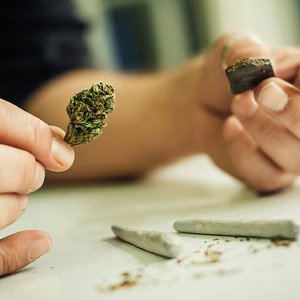
Hashish and THC Concentrates
Hashish, also known as “hash,” is a concentrated form of cannabis made by collecting and compressing the sticky, resinous trichomes (tiny hair-like growths) from cannabis plants. Unlike regular marijuana flower, hashish and other THC concentrates are processed to extract and concentrate the plant's most potent compounds, resulting in products that are far more powerful than traditional cannabis.
 ®