Is Marijuana Different Today From the Past?

The cannabis industry has gone from a small number of legal medical marijuana dispensaries to an industry worth a projected $80 billion in 2025. As with most consumer markets, businesses respond to demand by developing products that meet consumer preferences and expectations. This market-driven approach has led to substantial improvements in cultivation techniques and product development. Plants are selected based on their THC and CBD concentrations and cultivated according to demand.
While in the world of recreational marijuana this has meant an increase in THC, the main psychoactive substance found in cannabis, other strains focus on high concentrations of CBD, the main non-psychoactive substance, which has been studied for its potential therapeutic uses.
Industry participants have focused on enhancing potency through selective breeding and improved growing methods. Additionally, technological advances have enabled the production of concentrated cannabis products with even higher levels of THC. These market developments have resulted in cannabis products today that differ considerably from those available in previous generations, with notably increased potency levels. While these advances may help those using the plant for legitimate medical reasons, it has also resulted in an increased risk of addiction for millions of teenagers who face long-term health consequences from early and frequent exposure to high-THC cannabis.
How the Marijuana Market Has Changed in Recent Years

While the federal government continues to treat marijuana as an illegal drug, more and more states are legalizing its use for both medicinal and/or recreational use. There are now both legal and illegal markets for marijuana.
In the legal market, most recreational and medicinal marijuana demand is focused on products that are high in delta-9 tetrahydrocannabinol or THC, with levels as high as 30% or more. The illicit market, on the other hand, rarely contains more than 17% THC potency, climbing from 2% THC pre-1990. But today’s legal dispensaries are selling cannabis products that range from 20% THC to as much as 90% in concentrates (oils, vapes, etc.).
Cannabis Concentrates Arrive on the Market
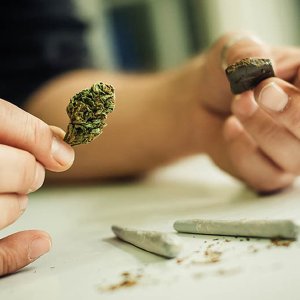
At one time, the only concentrated cannabis products were hashish and hash oil. Hashish was originally made by hand-collecting cannabis resins that were concentrated in the trichomes, fine, hairlike growths on the flowers. Once collected, these resins were pressed into hard brown blocks. The THC concentration of this hashish was around 30%. When the oil was created from these resins, the potency could reach 40%.

After commercialization, there has been an increased demand for highly potent products. These higher-potency products are commonly known as concentrates.
Currently, there are dozens of different types of concentrates sold in stores selling cannabis products. Here are some examples of these products:
- BHO/butane hash oil/butane honey oil: A distillation process using butane to extract the THC from cannabis. The result is a glassy, waxy, or oily product that can be as much as 90% THC.
- Crumble: Butane hash oil products that are further refined until they are dry and crumbly may be 80% to 90% THC.
- Distillate: A very highly refined cannabis product sold as a thick, oily liquid that can be 90% to 99% THC.
- Dry ice hash: When dry ice instead of butane is used to extract resins, the final product is a powdery material that is 30% to 60% THC.
- Hashtabs: Tablets or pills made from hashish concentrates. While other types of hashish are meant to be heated, hashtabs are meant to be swallowed. They may each contain 25 mg of THC.
- Rosin: A butane-free process that employs heat and pressure to extract resins. The result is usually an oily or waxy mass that is 50% to 85% THC.
- Shatter: Butane hash oil is further processed to turn it into a glass-like product. It’s 70% to 90% THC.
- Wax/Budder/Butter: A butane hash oil product further processed to make it into a creamy, buttery concentrate that is 70% to 90% THC.
The More Potent the Drug, the More Harmful It Is
A 2018 research paper from an addiction specialist explained how increased cannabis potency poses a greater risk for users. The author, Dr. Elizabeth Stuyt, stated: “We now have concentrated THC products such as oil, shatter, dab, and edibles that have been able to get the THC concentration upwards of 95%. There is absolutely no research that indicates this level of THC is beneficial for any medical condition. The purpose of these products is to produce a high, and the increased potency makes them potentially more dangerous and more likely to result in addiction.”
“The purpose of these products is to produce a high, and the increased potency makes them potentially more dangerous and more likely to result in addiction.”
Cannabis concentrates are designed to deliver the highest doses possible of THC.
Of course, one of the risks of cannabis use is addiction, especially when the potency is high or use is frequent. The National Institute on Drug Abuse (NIDA) states: “Higher THC concentrations have been associated with a greater likelihood of cannabis use progressing to cannabis use disorder, among other health concerns.”
Cannabis addiction is true addiction, identified by these signs:
- An inability to control or discontinue one’s use
- An increasing tolerance, meaning that one must use higher doses to get the same effect
- Continuing to use the drug despite health, relationship, or life problems created due to its use
- Using the drug in high-risk situations, such as driving
- Craving more of the drug
- Experiencing withdrawal symptoms when drug use ceases
NIDA describes cannabis withdrawal this way: “anger, irritability, aggression, feeling nervous or anxious, restlessness, decreased appetite or weight, depression, insomnia, experiencing strange or unsettling dreams, headaches, sweating, abdominal pain, and tremor.”
A 2021 study showed that cannabis was the second most common cause of drug-related visits to an emergency room. The more potent strains and concentrated products were involved in many of these visits. This study noted that some of the conditions associated with cannabis consumption can be life-threatening.
The Harmful Effects of Cannabis

After alcohol, marijuana is the most commonly-used addictive drug in the United States and the world. Its use among young people is of particular concern. That’s because when a person begins to use marijuana in their teens, they have a greater risk of addiction. A 2016 report in the New England Journal of Medicine states that those who initiate use in their teens have a one in six chance of addiction.
Marijuana use is known to cause:
- Significantly altered perceptions
- An altered sense of time and place
- Changes in mood, often occurring rapidly
- Impaired body movement and motor function
- Difficulty with thinking and general problem-solving
- Impaired memory, both long-term and short-term
- Hallucinations and delusions
Long-term effects of the drug include:
- Breathing problems
- Chronic bronchitis
- Heart disease
- Memory loss
- Increased risk of psychosis disorders
- Poor educational outcome
- Reduced cognitive function
- Increased risk for stroke
- Intense nausea and vomiting
- Addiction

Marijuana: What You Need to Know
While Hazards Increase, Fewer Teens Think Cannabis Is Risky
In the last couple of decades, the amount of scientific proof of the harm and addictiveness of marijuana continues to mount. The potency of cannabis products on the market has reached a maximum. On the other hand, teens’ impression of the riskiness of use has declined enormously.
From a recent survey, here are the percentages of 12th-grade students who think that regular use of marijuana is risky:
- 1994: 65%
- 2004: 54.7%
- 2014: 36.1%
- 2024: 35.9%
When fewer teens think marijuana use is risky, the number using the drug tends to go up. By the time our high school seniors graduate, more than 21% have initiated marijuana use.
Effective Help for Marijuana Addiction Is Vital
According to the Substance Abuse and Mental Health Services Administration, marijuana is one of the top five drugs sending people to rehab. Nearly 10% of all admissions to publicly-funded rehabs are due to marijuana addiction. Help for marijuana addiction must be effective and must help each person break their reliance on the substance. A rehab must also help each person build strong, new, sober living skills. These skills can enable them to make the right decision when they face new challenges.
Getting a marijuana-addicted person into a residential rehab immediately takes them out of their drug-using environment. Their drug dealers and drug-using friends are now far away. Instead, they are surrounded by staff who know what they have been through and want them to overcome their addiction.
Six Decades of Proof that Drug-Free Rehab Works

Over the past six decades, the Narconon drug and alcohol rehabilitation program has enabled tens of thousands of people to leave addiction behind. Whether that addiction was to marijuana, alcohol, heroin, methamphetamine, fentanyl, or other drugs, recovery is possible.
Many drug rehabs rely on medications to get a person through their program. At Narconon, there are no substitute drugs administered during the program. Many of the drugs used in other rehabs are themselves addictive, or they can have serious side effects. These six decades of experience have shown that recovery can be drug-free, safe, and lasting.
The Origins of the Narconon Program
Since its founding in 1966, the Narconon drug and alcohol rehabilitation program has helped tens of thousands of people overcome their addiction. This program is based on the discoveries of L. Ron Hubbard, an author and humanitarian who dedicated his life to helping people. Mr. Hubbard founded the Scientology religion. However, Narconon is not a religious program. It is a secular, public benefit program that does not teach or require any religious principles or beliefs.

Today, there are more than 30 Narconon residential facilities in 16 nations, with more centers being established to meet the needs of increasing drug and alcohol addiction.
Drug-Free Withdrawal Starts Recovery at Narconon
The first step, a drug-free withdrawal, helps each person see that the future can be bright. Generous nutritional supplementation and 24-hour support guides each person through their withdrawal symptoms. No medications are needed. The nutrition, gentle assists, and calming orientation exercises ease the discomfort of withdrawal. It’s a bright start toward a new sobriety.
Each person must be assessed by a medical professional before starting withdrawal at Narconon to determine if they need a medically supervised withdrawal.
Ridding the Body of Drug Residues to Relieve Cravings
The purpose of the New Life Detoxification is to flush out the residual drugs that are stored in the body. When drug use stops, the body is not able to eliminate every trace of the drugs. Some remain stored in the fatty tissues where they can remain for a long time. While they are present, they can trigger cravings and affect a person’s outlook, mood, and mental clarity.

The New Life Detoxification helps brighten mood and outlook and relieve these cravings. This action combines sweating in a low-heat sauna, moderate exercise, and a strict regimen of nutritional supplements that aid detoxification.
Connecting with the Real World Again
Once withdrawal and the New Life Detoxification are done, it is important to help each person recover from past guilt and trauma and restore their perception and communication. It’s time for the **Objectives.**These gentle, step-by-step exercises gradually bring a person out of a painful past and into the present. The present begins to look less dim and vague.
Once the present looks brighter, it’s possible to more fully engage in building a sober future.
Gaining the Skills to Protect Sobriety Long-Term
Rehab must train a person to make the right choices after going home if sobriety is going to last. There will still be challenges. Decisions must be made about relationships, jobs, and other activities. There will be problems to be overcome. Thorough life skills training is essential. The Narconon program has a three-part life skills training component.
- Overcoming Ups & Downs in Life: Some people keep their intentions hidden, and sometimes their intentions are not good. Drug dealers, criminal and drug-using friends could be willing to harm others. Being around these people can send one’s life up one day and down the next. It’s vital to be able to identify antisocial personalities and know how to deal with them to keep oneself safe. It’s also important to identify the good people in one’s life. This course teaches these skills to preserve a stable and sober life.
- Personal Values: Self-respect vanishes during addiction. It must be recovered, or a person may not even give themselves a chance at a happy life. The Personal Values course guides each person through the steps to recover self-esteem and integrity and maintain them in the future.
- Changing Conditions in Life: To solve problems and recover from setbacks, it helps greatly to know the formulas for success. This course teaches these formulas and then gives each person practice using them. Life is not so scary if one knows how to solve problems and achieve goals.
Narconon Is a Different Type of Drug Rehab
While many drug rehabs try to use other medications to replace addictive substances, there are no medications approved for cannabis rehab. However, drugs to treat what other programs believe are underlying issues are commonly prescribed. Narconon believes that addiction should not be addressed with medications, and our program uses no replacement drugs, nor does it treat underlying issues with medication. Instead, our program focuses on developing life skills and personal responsibility to address these underlying issues.
The Narconon drug rehab is not a 12-Step program, and here, addiction is not viewed as an incurable, chronic disease. Six decades of experience have shown that a healthy, holistic approach to recovery from addiction works very well. In those six decades, tens of thousands of people have graduated from this drug-free program.
If you care about someone who has become addicted to marijuana or any cannabis product, call Narconon today and learn about this long-term, residential rehab program.
Sources:
- “The Problem with the Current High Potency THC Marijuana from the Perspective of an Addiction Psychiatrist.” National Library of Medicine, 2018. NLM
- “Cannabis Potency Data.” National Institute on Drug Abuse, 2024. NIDA
- “Has marijuana actually got stronger since the 80s? Here's what the science says.” Business Insider, 2016. Business Insider
- “High-potency marijuana highlights the risk of cannabis-induced psychiatric disorders.” NBC News, 2024. NBC News
- “Cannabis (Marijuana).” National Institute on Drug Abuse, 2024. NIDA
- “The emergency department care of the cannabis and synthetic cannabinoid patient.” National Library of Medicine, 2021. NLM
- “UNODC World Drug Report 2024: Harms of world drug problem continue
to mount amid expansions in drug use and markets.” United Nations Office on Drugs and Crime, 2024. UNODC - “Understanding Your Risk for Cannabis Use Disorder.” Centers for Disease Control and Prevention, 2024. CDC
- “Adverse Health Effects of Marijuana Use.” National Library of Medicine, 2016. NLM
- “National Survey Results on Drug Use, 1975–2024: Overview and detailed results for secondary school students.” Monitoring the Future, 2025. MTF (Table 8-3)
- “Treatment Episode Data Set 2022.” Substance Abuse and Mental Health Services Administration, 2023. SAMHSA
- “Reintoxication: the release of fat-stored Δ9-tetrahydrocannabinol (THC) into blood is enhanced by food deprivation or ACTH exposure.” National Library of Medicine, 2009. NLM
Hashish and THC Concentrates
Hashish, also known as “hash,” is a concentrated form of cannabis made by collecting and compressing the sticky, resinous trichomes (tiny hair-like growths) from cannabis plants. Unlike regular marijuana flower, hashish and other THC concentrates are processed to extract and concentrate the plant's most potent compounds, resulting in products that are far more powerful than traditional cannabis.
Signs and Symptoms of Marijuana Use
Learn to identify the physical and behavioral signs of marijuana use. From bloodshot eyes to loss of motivation, discover the symptoms of use and how to find help.

 ®