Finding an Effective Drug Rehab for Tennessee
on this page

Tennessee is a state of contrasts. It has major cities like Nashville, Memphis, and Knoxville and it also has many miles of two-lane roads passing hundreds of miles of farmland and hardwood forests. Outside of the cities, life in Tennessee runs much as it did decades ago, with close-knit families struggling with low income and high unemployment. These conditions create an atmosphere in which drug use is tolerated and the business of running drugs may just be seen as a way to eke out a living.
The drugs being supplied to Tennesseans ebb and flow, with the supply of one drug increasing then decreasing in favor of some other drug that is now more popular. Along with Kentucky, marijuana cultivation was popular for many years, with national forests being the popular choice for croplands. As more U.S. states legalize this drug, shipments of pot that was legal in its home state make their way to Tennessee and surrounding states.
The popularity and supply of heroin and prescription drugs see-saw back and forth, with pills being more popular (and being seized more often) one year and heroin being found more often the next. Overall, heroin is seen as a bigger threat to more communities than pills but pills send more people to drug rehabs. Supplies primarily come in from Chicago, Cleveland, Baltimore, and Atlanta.
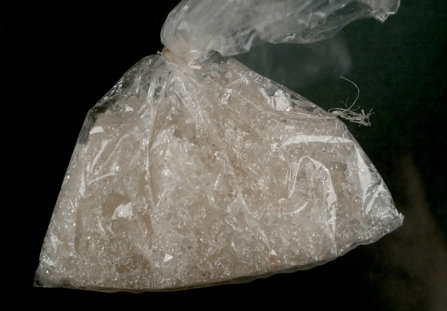
The fastest growing drug in the last few years is the crystallized form of methamphetamine. A decade ago, meth was produced in small domestic labs. But then, the chemicals needed were placed farther out of reach of these small lab operators and they largely went out of business. Mexican drug traffickers saw the opportunity and built superlabs capable of producing meth on an industrial scale. As a result, seizures of crystal meth in the Appalachian states have increased approximately 400%. In the last few years. Atlanta has developed into a hub for trafficking meth into Tennessee and other parts of Appalachia.
Painkillers Overtake Alcohol in Treatment Admissions
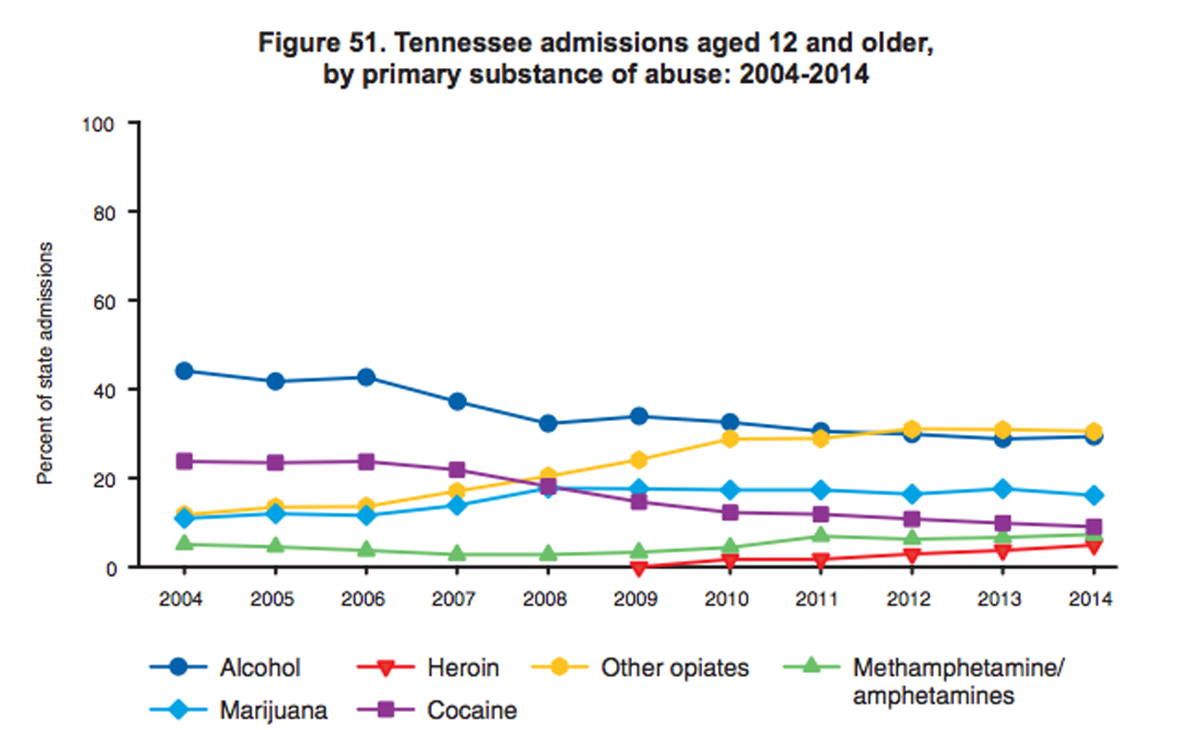
Since 2004, the proportion of people entering addiction treatment for alcohol problems in Tennessee has been declining. That’s because a higher proportion of individuals needing help for painkiller addiction have been entering rehab. This number of people needing help for addiction to pills began to increase in 2006 and leveled off in 2011 when law enforcement began to put overprescribing doctors behind bars. At that same time, the number of people who needed help for heroin addiction began to inch up. Methamphetamine admissions have been inching up as well, as the supply channels from Mexico have developed.
The Narconon Drug Rehab Program
For over fifty years, Narconon has been the path back to hope for tens of thousands of individuals all around the world. From Tennessee, a person might choose the Narconon rehab center in Michigan or the ones in Louisiana or Florida. A short flight would take them to the Narconon facility in Oklahoma, and there are other centers in California and Colorado.
The path to sobriety begins with an assessment by the Narconon center medical director and then with Drug-Free Withdrawal. If the individual needs medical assistance to safely withdraw from drugs (as in the case of heavy alcohol use or benzodiazepines) our staff work with medical detox facilities to safely and swiftly as possible get the individual to a point where they can begin their journey to a truly drug-free life.
After the individual has gotten through the detox and withdrawal, the Narconon program utilizes the New Life Detoxification to help each person through post-acute withdrawal syndrome and recover their ability to think clearly and fully address. After years or even decades of drug or alcohol use, the body has a build-up of toxic residues. These residues are left behind because a person’s body is not normally capable of clearing 100% of all drug traces. The combination of time in a low-heat sauna, a strict regimen of nutritional supplements and moderate daily exercise activates the body’s ability to wash away these residues. The result of the New Life Detoxification is a brighter outlook and clearer, faster thinking.
Regaining the Ability to Live a Sober Life
Now a person must regain the abilities he lost while addicted—or perhaps never learned before addiction took over his life. He starts with the objectives, a series of exercises that gradually brings him back into communication with the real world, his current environment. Anyone around an addicted person knows that their perceptions are muddled by all the drugs or drinks. This is where he can get them brightened. Day by day, the trauma of the past fades away and hope for the future replaces it.
The next steps are life skills training to enable him to make the right choices, to choose the right friends and associates. He must learn how to truly forgive himself for all the harm he has done in the past and experience the relief this forgiveness brings. This is the only way he will permit his own future happiness. And he must learn what to do when life presents serious challenges. He has to know he can overcome them so he doesn’t feel the need to hide in drug abuse.
When he has learned these lessons and learned also how to put them into action in his life, he is ready to go home and create a new, healthy life for himself.
Get Help Now
Drug-Related Deaths on the Increase

The Coroner’s office in Knox and Anderson Counties notes that their drug-related deaths have doubled between 2010 and 2015. Coroner Darinka Mileusnic-Pulchan stated, “Here in East Tennessee, the substance abuse victims were the ordinary people, the next door neighbors, our family members, the veterans, young and old, sick and apparently healthy who just briefly experienced some sort of pain.”
She commented that the drug-related deaths in these counties are predominantly related to prescription drugs (75% or all drug deaths) and that most victims fall into the 45-54-year-old age range. She also noted the high number of pain clinics in the counties.
Statewide, 1,263 people were lost to opioid overdose (painkillers) in 2014. The Centers for Disease Control and Prevention has estimated that more than one million Tennesseans, or about 1 in 6, are misusing or abusing opioids or are in treatment for addiction to these drugs. The state has the second-highest rate of prescriptions per person, second only to West Virginia.
No one—in Tennessee or elsewhere—ever plans to become addicted. No one uses a drug with the intention of losing everything he (or she) loves to that drug. There’s simply the idea of having fun with others, coping with a pain or illness or softening the blow of some setback or disappointment. There’s the idea that hanging out with friends will be more fun or that meeting people and making friends will be easier. These people deserve an effective method of making their ways back to sobriety and productive, enjoyable lives.
When someone you care about needs help to build a new, sober life to replace the one destroyed by addiction, call Narconon. For more than fifty years, we have offered a 100% drug-free solution to addiction. Our help is available to you and your family.

 ®
®
 ) on our articles for the most up-to-date and accurate information.