The Dangerously Brief Benefits of Narcan: Why Overdose Symptoms May Return
The limits of the Narcan opioid antidote and the very real danger of overdose recurrence minutes or hours later.

In the last decade or so, Narcan has become an essential supply for police, firemen and emergency medical technicians across the country. That’s because Narcan—also known as naloxone—is the drug that reverses an opioid overdose. First responders carry this drug in a form that can be sprayed into the nostrils of a person succumbing to an overdose of heroin, fentanyl, oxycodone or other opioid drug. When that person receives enough naloxone, they will come out of their stupor, start breathing again and escape the clutches of death.
Prior to 2010, it was only paramedics who carried naloxone out in the field. At that time, it had to be administered as an injection. As the loss of life from opioid drugs increased, there was a greater call to equip more first responders with naloxone. Police and firemen began to be supplied with this drug in more regions of the country. In 2015, the Food and Drug Administration approved naloxone in its current form as a nasal spray.
Starting in 2016, there began to be a widespread call to distribute naloxone products to the families of patients taking opioid medications prescribed by their doctors. The Centers for Disease Control and Prevention recommended co-prescribing naloxone with opioid medications. This was followed by further efforts to put naloxone into the hands of anyone in the community who might need to reverse an opioid overdose. Good Samaritan laws in nearly every state provided legal immunity for a community member who tried to reverse an opioid overdose with naloxone, should they unintentionally cause harm to the victim.
For several years, naloxone or Narcan was only available by prescription. Then in 2023, the Food and Drug Administration approved an over-the-counter version of naloxone. This meant that anyone who wanted to have naloxone on hand for an emergency could get it without needing to have a prescription.
A Closer Look at Naloxone
Which drugs can have their effects reversed by naloxone?

Naloxone can be used with any opioid drug, which includes:
- Heroin
- Oxycodone
- Hydrocodone
- Morphine
- Fentanyl and all chemically similar drugs (called fentanyl analogs)
- Hydromorphone
- Oxymorphone
- Methadone
- Buprenorphine
- Codeine
- Tramadol
- Opium
What are the different names for naloxone?
Naloxone is a generic name for the drug that reverses the opioids. The most well-known brand name for naloxone is Narcan. It may also be purchased as Rivive, Zimhi or Evzio. The Food and Drug Administration recently approved a higher dosage of naloxone in a nasal spray form that is brand-named Kloxxado.
Another use for naloxone
While for the purposes of reversing an overdose, naloxone formulas are normally injectable or sprayable, the drug is also found in combination with buprenorphine, an opioid painkiller. This drug is used around the world in medication-assisted treatment for opioid addiction. This combination formula is best known by the brand name Suboxone.
The buprenorphine in Suboxone keeps a person from craving opioids or going into withdrawal. The naloxone in the formula is a guard against the person trying to abuse that formula. Anyone trying to abuse Suboxone or similar formulas will precipitate withdrawal sickness. Suboxone may be administered as a pill or a film to be placed inside the cheek.
While the overwhelming idea is to save lives from opioid overdoses, there are a couple of problems associated with its use. One of those problems is this fact: the effects of some opioids last longer than naloxone’s effects. That means that symptoms of overdose may return after naloxone wears off.
Why Would Opioid Overdose Symptoms Return?

When first responders are called to the site of an overdose, they are faced with a person who may have stopped breathing. They can’t talk and may be completely unresponsive. These police officers, fire department personnel and EMTs can’t ask the person what drug they took. They will do a sternum rub, which consists of a hard rub across the breastbone with their knuckles. This painful action will get a reaction from anyone who is capable of responding.
If the person has multiple symptoms of opioid overdose, the first responder will administer naloxone immediately. These symptoms include:
- Struggling to breathe or stops breathing
- Slow or no heartbeat
- Blue lips and fingernails
- Limb and unresponsive
- Skin clammy and pale
- Unable to speak
- Vomiting
- Gurgling or heavy snoring
- Small pupils

Once the first responder squirts the naloxone into the nostrils of the victim, in most cases the person will respond within two to three minutes. Naloxone will continue to reverse this overdose for only 30 to 90 minutes. And that’s where the danger lies.
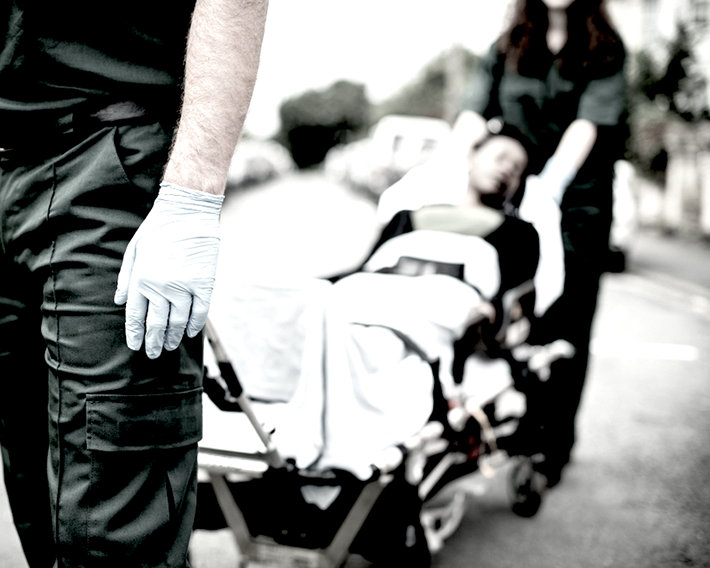
Some opioids are fast-acting and their effects wear off just as quickly. But other opioids last for many hours. When the antidote only lasts 30 to 90 minutes, the opioid effects can return as soon as the antidote wears off. That’s a major reason emergency medical personnel try to get a person who has just overdosed to an emergency room. They should really be monitored after being revived.
One officer who was experienced in administering naloxone reported:
We don’t let people walk away that have overdosed. They will go to the hospital whether it’s on their own or through immediate detention. Because once you walk off, that Narcan can wear off and you will drop off.
Another officer said:
It’s not an “If”—it’s a ‘You’re going to the hospital.’ If they won’t go, we will force them to go under immediate detention…. If they don’t go to the hospital and get more Narcan, they will overdose again. We use that as a justification of making them go.
Multiple Doses of Naloxone May Be Required
The amount of naloxone needed to save a person’s life depends on how much of an opioid they consumed and the potency of that drug. Originally, the instructions for naloxone said to administer one dose (0.04 milligrams) and wait two minutes. If there is no response within two minutes, another dose should be given, followed by further doses if there is still no response.
In really severe cases, a person may need to be on a continuous infusion (intravenous administration) of naloxone until the opioid effects totally wear off. Methadone, for example, is a very long-acting opioid. A person who has overdosed on methadone may need to receive a naloxone IV for several hours until the methadone’s effects wear off.
When fentanyl arrived on the illicit drug scene in the mid-teens, the amount of naloxone needed to reverse many overdoses went up significantly. One report on the various ways to administer naloxone noted that in the event of fentanyl or carfentanil use, as much as 10 milligrams of naloxone may be needed to reverse the overdose. This report also recommended monitoring the person who overdosed for six to 12 hours to ensure that “renarcotization” (re-overdosing after being revived) does not occur.
For all these reasons, it is vital for a person administering naloxone in a home or out in the community to summon emergency medical services every single time, even if the victim wakes up from the antidote.
One More Problem Associated with Administering Naloxone
If a person is addicted to opioids and receives naloxone for an overdose, the drug may precipitate withdrawal symptoms. Suddenly, they could suffer from symptoms like these:
- Body aches
- Diarrhea
- Fast heart rate
- Fever
- Sweating
- Vomiting
- Nervousness,
- Irritability
- Abdominal cramps
First responders who might expect to be thanked for saving someone’s life instead are faced with someone who is in pain, sick and angry. Occasionally, the person comes out of the overdose reacting violently and trying to hit the officer. A few people will be upset that the officer or EMT ruined their drug experience.
First responders have to anticipate any possible reaction, from regret over overdosing while the person’s children were present to the individual getting on their feet and running off.
Naloxone Only Keeps the Person Alive
Once the person is revived from the overdose, many first responders will go on to try to convince that person to accept further help. In 2022, the State of Florida took more drastic and effective steps to help the overdose victim. Multiple health agencies combined their efforts and initiated the Coordinated Opioid Recovery (CORE) program. Their announcement of this program stated:
The network does not solely depend on emergency response for overdoses and substance use disorder, ensuring patients are also stabilized and treated for coexisting medical and mental health conditions. Patients will need dental care, primary care, psychiatric evaluation, maternal care, and social support services. Social support services can address career training, housing, or food insecurity.
In other words, as soon as a person was stabilized after coming out of an overdose, the intention was to refer them immediately to a specialty medical facility that could start them on their way to recovery from drug use of any kind.
Naloxone is only a band-aid on the person’s problems, but it is an effective band-aid because it keeps them alive. What must happen after that is that more services similar to those being offered in Florida must be provided. That is how more people can eliminate any possibility of a future opioid overdose. And gradually, we can begin to reduce our overdose losses and enable those who are addicted to enjoy a healthy, productive life once again.
Sources:
“Naloxone for Opioid Overdose: Life-Saving Science.” National Institute on Drug Abuse, 2021. NIDA
“FDA Approves First Over-the-Counter Naloxone Nasal Spray.” Food and Drug Administration, 2023. FDA
“Orange Book.” Food and Drug Administration, 2023. FDA
“Perspectives from law enforcement officers who respond to overdose calls for service and administer naloxone.” Health and Justice Journal, 2022. Health and Justice Journal
“Management of Opioid Analgesic Overdose.” National Library of Medicine, 2012. NLM
“Naloxone.” National Library of Medicine, 2023. NLM
“FDA Approves First Over-the-Counter Naloxone Nasal Spray.” Food and Drug Administration, 2023. FDA
“Coordinated Opioid Recovery.” Florida Health, 2022. Florida Health

 ®
® ) on our articles for the most up-to-date and accurate information.