Opiates Gradually Overtaking Alcohol as #1 for Treatment Admissions
So far, news media have broadcast stories about two states that report similar rates of rehab admissions for opiates and alcohol. This may not be startling news until you realize that in most states, most years, alcohol far outstrips any other drug in the number of people sent to rehab. Here are some specifics to look at.
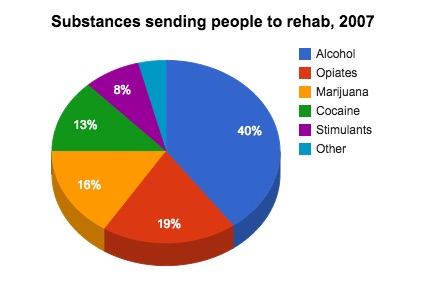
Chart data source: http://wwwdasis.samhsa.gov/teds07/TEDSHigh2k7.pdf
New Jersey: According to Governor Christie, nearly half of all New Jersey admissions to treatment in 2013 were due to opiates or synthetic opiates (opioids) like hydrocodone (Vicodin, Lor-tab), oxycodone (OxyContin, Percodan) or heroin.
Compare that to this chart showing national statistics in 2007 for the drugs sending people to rehab. Alcohol was far and away the top drug driving arrivals at rehab centers.
Now, compare those numbers to the national statistics from 2012.

You’ll see that the proportion for alcohol admissions has shrunk slightly while admissions for opiates has grown. Numbers for cocaine and stimulants like methamphetamine, amphetamine, Adderall or Ritalin have also shrunk very slightly.
Ohio: In December 2014, the Media Network of Central Ohio reported a similar trend in their state. In 2013, 33% of those treated for addiction needed help with alcoholism and 32% were in rehab for painkiller addiction. They were not even including heroin in this figure.
In 2012, only 28% of those admitted to rehab in Ohio were there for painkillers. And in 2008, the number was less than 16%.
In 2012, 1,900 Ohioans died from drug overdoses. The most common killer these days is opiates.
Avoiding Opiate Addiction
• If you are a parent, make sure your children understand the dangers of using drugs. If they are teens or nearly to that age, ensure they understand the addictive and deadly power of painkillers and other opiates.
• If you are prescribed opiates after an injury or surgery, talk to your doctor about the addictiveness of these drugs. Ask for your prescription to last only as long as you are likely to be in pain. Work with your doctor to come off these strong drugs as soon as possible.
• If someone you care about has been taking opiate painkillers for an extended time and they are no longer injured or in pain, see if you can help them come off the drugs with the help of their doctor. The person may feel more relaxed and mellow on these pills and may value them but they are losing their own personal point of view and are likely to be developing a dependence.
By being alert to the problems that can occur and helping those around you avoid addiction to painkillers, you could possibly be responsible for saving their life someday. Any misuse of these drugs is that dangerous and being alert to this danger is that important.
Source:
The war on drugs has failed, treat NJ heroin addiction as an illness


 ®
® ) on our articles for the most up-to-date and accurate information.