A History and Timeline of Cannabis Cultivation and Use

Thousands of years before cannabis became commonly abused in the Americas, the cannabis plant had many medical and industrial uses. In ancient China and Egypt, cannabis was a medicine used for soreness from gout, rheumatism and other problems. The ancient Greeks used cannabis to relieve inflammation.
The Chinese used the fibers from the cannabis plant for fabric, bow strings, fishing nets, paper and rope as far back as 1000 B.C. Romans and Vikings also relied on hemp for ropes for their sailing ships. Gradually, the use of hemp moved to England, which became a major sea power around 1500 A.D. King Henry VIII greatly increased the number of ships in the English navy but English farmers could not keep up with the demand for hemp to make rigging. Therefore, shipbuilders began importing the fiber from Russia.
In the American colonies, hemp was a very important crop for the economic development of a new country. Both Thomas Jefferson and George Washington were hemp farmers. Hemp was heavily used in shipbuilding. The cultivation of hemp spread across the country. Using high quality plants imported from Russia and applying cultivation techniques perfected in the Americas for tobacco, America joined the British in importing higher quality hemp, until the quality of American-grown hemp improved. Hemp plantations became more common in Virginia and Kentucky. As Americans headed West their durable clothing and covered wagons were made from hemp fibers. Hemp products were more popular than cotton until the cotton gin was invented. In the early 1800s the use of this machine spread in popularity as did the cotton crops replacing hemp to some degree. When steamships replaced sailing ships in the late 1800s, the need for hemp began to wane even further.
How Can Cannabis Be an Intoxicant, a Medicine and an Industrial Product?
When a cannabis plant has a high quantity of the intoxicant THC, it is referred to as marijuana. When a cannabis plant contains a low quantity of THC, it is called hemp.
- High-THC cannabis is used by those who want an intoxicating drug.
- Extracts of the plant are purified and standardized by pharmaceutical companies and then are used medically.
- Low-THC cannabis is still used for some clothing, cosmetics, paper and building materials.
- These different uses require different growing methods for the cannabis plant so it develops higher or lower levels of THC.
There is evidence that the ancient Chinese knew about the psychoactive effects of the plant. Around 100 A.D., a medical reference book stated that if the seeds are taken in excess, they “will produce hallucinations.” The seeds were later mixed with wine to create an anesthetic that could be used during surgery.
In the late 1800s, cannabis began to be added to patent medicines sold directly to the public in America. Medicines that contained cannabis extracts:
- Bromidia: Cannabis and chloral hydrate, a hypnotic for “restlessness.”
- From Squibb, Zinc phosphide and cannabis pills for “neuralgia, sciatica, and spasmodic pains generally.”
- Dr. Macalister’s Cough Mixture: Cannabis, chloroform, and alcohol, for children and adults.
- Neuralgic pills: Mainly opium and cannabis.
- Chlorodyne: Morphine, cannabis, and nitroglycerin.
It is certain that these medical concoctions brought about intoxication for anyone who used more than the most minimal amount.
Cannabis Products Begin to Be Banned

Soon after 1910, European and American legislators began to ban the use of drugs. The Opium Convention in 1912 and the Harrison Act of 1914 defined the use of cannabis and other drugs as crimes.
Slowly, the US states began to outlaw the sales and use of cannabis products, including Utah and Wyoming (1915), Texas (1919), Iowa, Nevada, Oregon, Washington and Arkansas (1923) and Nebraska (1927). Northern states like Maine, Vermont, Massachusetts and New York considered cannabis a narcotic, along with opium, morphine, heroin, and codeine, and had already outlawed its use without a doctor’s prescription.
In the 1920s, the smoking of marijuana became popular, particularly among jazz musicians and other entertainers. Hand-rolled marijuana cigarettes were called reefers or joints. Marijuana clubs sprang up in major cities. These establishments were tolerated by authorities because marijuana was not illegal in most areas.
Law Enforcement Begins to Target Cannabis Use
A campaign conducted in the 1930s by the U.S. Federal Bureau of Narcotics sought to portray marijuana as a powerfully dangerous substance that would cause users to become violent. By 1937, the agency’s director, Harry Anslinger, succeeded in getting the Marihuana Tax Act (the spelling used in the Act) passed which criminalized the use of cannabis unless proper taxes were paid. This law not only suppressed the smoking of cannabis but also the use of hemp for cloth or rope.
Then, between 1952 and 1956, two laws were passed that brought America into its current position of outlawing addictive substances and arresting drug users. The first was the Boggs Act and the second was the Narcotics Control Act of 1956. First-time possession of marijuana could receive a sentence of two to ten years in prison.
Cannabis Consumption in the U.S. Increases in the Mid-Century
By the 1950s, cannabis use was a phenomenon of the Beat Generation. In the 1960s, it was used by college students and hippies and became a symbol of rebellion against authority.
As American consumption of marijuana increased, the potency of marijuana did as well. The THC content averaged between 3% and 4.5% in the 1990s and steadily climbed for the next decade. By 2008, the average THC content of seized samples would hit 8.8%. However, certain strains of the plant reached concentrations between 11% and 13%.
By 2005, the most potent cannabis products hit 38% THC. This was followed by the development of dozens of types of cannabis concentrates. The potency of these new products ranged from 30% to 99% THC. As the potency increased, so did the harm to users and the drug’s addictiveness.
Medical Marijuana Begins to be Approved, State by State
In 1996, California became the first state to approve the medical use of marijuana, despite federal bans remaining on the books. Initial approval was restricted to the treatment of AIDS, cancer, muscular spasticity, migraines, and several other disorders.
As other states began to launch legislation to approve medical use of marijuana, former presidents Ford, Carter, and Bush released statements urging voters to reject these initiatives because they circumvented the standard channels for approval of medications by the Food and Drug Administration.
Despite this warning, in November 1998, Alaska, Oregon, and Washington passed legislation to legalize medical marijuana. Maine and Hawaii soon followed, with many more states passing similar legislation in the next several years. In May 2012, Connecticut became the seventeenth state to legalize the use of medical marijuana.
Any state that legalized cannabis use for either medical or recreational use saw thousands of new growers, dispensaries and retail stores springing up. By 2025, there were more than 15,000 sales outlets for cannabis products in the 39 states in which some kind of cannabis use was legal.
American Teens and Cannabis Use

While state and federal governments debated the merits or dangers of medical marijuana, an increasing number of teens began to use the drug. From a low of 33% in 1992, usage by high school seniors increased to 49% by 2001 and fluctuated between 42% and 45% through 2011. By 2024, marijuana products were being used by 26% of 12th-grade students and 18% of 10th-graders, according to the annual Monitoring the Future survey. Thirteen percent of 12th-graders were daily users of cannabis products.
Perhaps one of the most significant statistics related to teens and marijuana use is the measurement of how much risk teens think is associated with regular use of marijuana. In 1991, 82% of tenth graders felt that this was a risky activity. This number declined steadily until it reached 55% in 2011. A decreasing perception of risk is normally followed by increasing usage statistics. By 2024, this number had declined to 36% of teens considering marijuana use a risky activity.
A study published in 2012 from King’s College in London and Duke University found that those under 20 years of age who abused marijuana at least four days a week lost an average of eight IQ points and that these IQ points did not recover if they stopped using the drug. When individuals refrained from smoking marijuana until they turned twenty, they were not similarly affected.
Tests by the National Highway Traffic Safety Administration found that marijuana use affects a driver’s ability to concentrate on driving, think, and react quickly to changing driving conditions. One study showed that a person who used marijuana within the three hours before driving doubled their risk of a traffic accident.
Cannabis-Related Substance Use Disorders in 2023
By 2023, nearly 62 million Americans were using a cannabis product each year, according to the National Survey on Drug Use and Health published by the Substance Abuse and Mental Health Services Administration. More than 19 million of these individuals deal with addiction to the drug.
Also in 2023, more than a million Americans between the ages of 12 and 17 suffered a cannabis-related substance use disorder, along with 5.6 million people between the ages of 18 and 25.
A Person Who Is Addicted to Marijuana Needs Help
The more potent the cannabis, the more addictive it can be. As of 2022, more than 17 million Americans were daily or near-daily users of this drug. Those who depend on this drug every day are very likely to need help breaking this habit.
If someone you care about is using cannabis products or if they use any form of this drug frequently, get them help. The longer they use cannabis in flower (most common and traditional form consumed), concentrate, or liquid form, the more likely it is that they will suffer negative effects like the following:
- Drowsiness
- Loss of an accurate sense of time
- Reduction of short-term memory
- Loss of ability to concentrate and complete tasks
- Lowered coordination
- Impaired ability to carry out complex tasks such as driving due to distortions in time and space perceptions
- Reduced comprehension and ability to learn
- Lowered inhibitions
- Impaired judgment
- Lowered ability to listen accurately and think clearly
- Slow speech
- Lowered motivation
Whenever a person uses too much marijuana and becomes too intoxicated, the effects can be downright dangerous. They can become aggressive or anxious. They may be confused or panic. They may feel they can’t move or be heavily sedated. In a few cases, users of Marijuana with very high THC concentrations have become psychotic. Studies of the drug show that chronic users may suffer the worst withdrawal effects and an increased risk of physical dependence and addiction.
The Impact of Cannabis Addiction

No one plans to become addicted. It happens after a person relies on a drug to relieve some problem or difficulty they are struggling with. The difficulty could be as simple as anxiety in social situations. Or it could be as serious as being fearful or uncomfortable every minute of the day. A person who becomes addicted to cannabis gets more than they bargained for. They may now struggle with:
- Loss of motivation
- Isolation from family and friends
- Abandonment of career or educational goals
- Poor performance at work or in school
- Severe mental problems
- Inability to stop using the drug despite the problems being caused
- Neglect of appearance
- Mood swings
- Lying, secrecy, and paranoia
Cravings can make it difficult for a person to get their life back on the straight and narrow, even if it’s what they want more than anything else.
How to Help Someone Recover from a Marijuana Addiction
The Narconon Drug and Alcohol rehab program is an effective program that has helped many people recover from addiction to cannabis, alcohol, heroin, methamphetamine, or other drugs. It has been helping individuals achieve lasting sobriety for nearly 60 years.
There are more than 30 Narconon residential drug rehab programs in 16 countries. When a person walks through these doors, they are immediately separated from their drug dealers and drug-using contacts. They have the support they need to make it all the way through this program so they can discover their own sober life at the end.
How Is Narconon Different from Other Drug Rehabs?
Many drug rehabs employ substitute medications as part of their programs, either to treat withdrawal symptoms or to treat the mental consequences of drug abuse. There are no medications used as part of the Narconon drug rehab program unless it is for routine medical conditions such as raised blood pressure or antibiotics for infections. Nor are any pharmaceutical drugs offered as substitutes for the drug a person was using.

Narconon is also not a Twelve Step program. At Narconon, no one will be told that they “will always be an addict” or that addiction is an incurable, chronic disease. The Narconon program focuses on enabling a person to make positive, sober choices. An almost sixty-year record of success has proven that Narconon can provide a path to lasting sobriety.
Help Someone You Care About Arrive at a Narconon Rehab
Addiction to marijuana, hashish, or cannabis concentrates can ruin a person’s life. Learn more about this program now and find out how it can help someone you love recover from addiction. Call Narconon today for a confidential conversation.
Detailed Timeline of Marijuana and Cannabis Use and Abuse
- Circa 2700 BC: First recorded use of cannabis as medicine in Chinese pharmacopeia.
- 1500 BC: Cannabis cultivated in China for food and fiber.
- 1500 BC: Scythians cultivate cannabis and use it to weave fine hemp cloth.
- 1200-800 BC: Cannabis is mentioned in the Hindu sacred text Atharvaveda (Science of Charms) as “sacred grass”—one of the five sacred plants of India.
- 500 BC: Hemp is introduced into Northern Europe by the Scythians. An urn containing leaves and seeds of the cannabis plant, unearthed near Berlin, is dated to about this time.
- 500-100 BC: Hemp spreads throughout Northern Europe.
- 70 AD: Dioscorides mentions the use of cannabis as a Roman medicament.
- 170: Galen (Greek physician in the Roman Empire) alludes to the psychoactivity of cannabis seed confections.
- 500-600: The Jewish Talmud mentions the euphoric properties of cannabis.
- 900-1000: Scholars debate the pros and cons of eating hashish. Use spreads throughout Arabia.
- 1090-1256: In Khorasan, Persia, Hasan ibn al-Sabbah (“the Old Man of the Mountainsia, Hasan ibn al-Sabbah") hashish. Use spreads throughout Arabia as confections. The cannabis plant, unearthed near Berlin, is dated to about this time and used as part of the discovery of the inebriating powers of cannabis and the supposed use of hashish.
- 1200s: Cannabis is introduced in Egypt during the reign of the Ayyubid dynasty on the occasion of the flooding of Egypt by mystic devotees coming from Syria.

- 1231: Hashish introduced to Iraq.
- 1271-1295: Journeys of Marco Polo in which he gives secondhand reports of the story of Hasan ibn al-Sabbah and his “assassins” using hashish. First time reports of cannabis have been brought to the attention of Europe.
- 1300s: Arab traders bring Cannabis to the Mozambique coast of Africa.
- 1378: Ottoman Emir Soudoun Scheikhouni issues one of the first edicts against the eating of hashish.
- 1700s: Use of hashish, alcohol, and opium spreads among the population of occupied Constantinople.
- Late-1700s: Hashish becomes a major trade item between Central Asia and South Asia.
- 1840: In America, medicinal preparations with a Cannabis base are available. Hashish is available in Persian pharmacies.
- 1843: Le Club des Hachichins, or “Hashish Eater’s Club,” established in Paris.
- After 1850: Hashish appears in Greece.
- 1856: British tax ganja and hand-rolling hashish (charas) trade in India.
- 1875: Cultivation of hashish introduced to Greece.
- 1890: Greek Department of Interior prohibits importation, cultivation, and use of hashish.
- 1890: Hashish made illegal in Turkey.
- 1893-1894: 70,000 to 80,000 kg of hashish legally imported into India from Central Asia each year.
- Early 1900s: Hashish smoking was very popular throughout the Middle East.
- 1915-1927: Cannabis begins to be prohibited for non-medical use in the U.S.
- 1920s: Hashish smuggled into Egypt from Greece, Syria, Lebanon, Turkey, and Central Asia.
- 1928: Recreational use of cannabis is banned in Britain.
- 1920s-1930s: Hashish produced in Turkey near the Greek border.
- 1930s: Legal taxed imports of hashish continue into India from Central Asia.
- 1930s: Metaxas, the dictator in Greece, cracks down on hashish smoking.
- 1934-1935: Chinese government moves to end all Cannabis cultivation in Yarkand. Hashish production becomes illegal in Chinese Turkestan.
- 1937: Cannabis made federally illegal in the U.S. with the passage of the Marijuana Tax Act.
- 1950s: Hashish still smuggled into India from Chinese Central Asia.
- 1950s: Moroccan government tacitly allows kif cultivation in the Rif Mountains.
- 1962: First hashish made in Morocco.
- 1965: First reports of C. afghanica use for hashish production in northern Afghanistan.
- 1967: The first hashish oil appears in the U.S.
- 1969: Iceland bans marijuana use.
- 1970-1973: Huge fields of cannabis are cultivated for hashish production in Afghanistan.
- 1970: The Comprehensive Drug Abuse Prevention and Control Act is passed. Part II of this is the Controlled Substances Act (CSA), which defines a scheduling system for drugs and places most of the known hallucinogens (LSD, psilocybin, mescaline, peyote, cannabis) in Schedule I, along with cannabis products.
- Early 1970s: Turkish hashish in western Europe.
- Early 1970s: Afghani hashish varieties introduced to North America. Law enforcement efforts against hashish begin in Afghanistan.
- 1973: Nepal bans cannabis shops and charas (hand-rolled hash) exportation.
- 1973: The Afghan government makes hashish production and sales illegal.
- 1975: FDA establishes the Compassionate Use program for medical marijuana.
- 1980s: Morocco becomes one of the largest—if not the largest—hashish-producing and exporting nations.
- 1987: Moroccan government cracks down on cannabis cultivation in lower elevations of the Rif Mountains.
- 1995: Introduction of hashish-making equipment and appearance of locally produced hashish in Amsterdam coffee shops.
- 1996: Medical marijuana becomes legal in California.
- 1997: Poland criminalizes marijuana.
- 2000: Between 1997 and 2000, Oregon, Alaska, Washington, Maine, Hawaii, Nevada, and Colorado legalize the medical use of marijuana.
- 2001: Canada legalizes medical marijuana. Portugal decriminalizes marijuana along with all other drugs, setting up a strict system of legal review and referral to rehab for those found with drugs.
- 2003-2006: Belgium, Russia, Estonia, Chile, and Brazil decriminalize or reduce penalties for cannabis possession.
- 2008: Austria legalizes medical cannabis.
- 2012: Colorado and Washington pass laws legalizing recreational use of marijuana.
- 2013: Uruguay legalizes recreational marijuana.
- 2015-2016: Alaska, Oregon, Washington, D.C. and California legalize recreational use of cannabis products.
- 2017: Pharmacies in Uruguay begin selling cannabis products to anyone over 18.
- 2018: Canada legalizes recreational use of cannabis. South Africa and Georgia legalize adult personal use.
- 2019-2020: Other countries and the Australian Capital Territory legalize or decriminalize cannabis.
- 2020: The United Nations reclassifies cannabis, removing it from the most restrictive category of controlled substances.
- 2019-2023: Many more countries legalize the use of cannabis for medical or adult use, including Switzerland, Thailand, Mexico, and Ukraine. More U.S. states legalize its use.
- 2024: Germany legalizes cannabis clubs.
- 2025: Thirty-nine U.S. states have legalized cannabis products for medical or recreational use.
Sources:
- “Cannabis.” Drug Enforcement Administration, undated. DEA
- “History of Cannabis in Ancient China.” Psychology Today, 2011. Psychology Today.“The UK's compulsory cannabis law - grow hemp... or else.” Ecohustler, 2018. Ecohustler
- American colonies: “Hemp & Flax in Colonial America.” Colonial Williamsburg, undated. Colonial Williamsburg
- “Industrial Hemp Production.” PennState Extension, 2023. PennState
- "CBD, marijuana and hemp: What is the difference among these cannabis products, and which are legal?” Michigan State University, 2021. MSU
- “Cannabis Cultivation in the Ancient World.” New Jersey Chapter, American Academy of Pediatrics, 2019. NJAAP
- “Hemp Extract (Extractum Cannabis) in the Treatment of Gastrointestinal Distress and Dyspepsia: Historical Insights from Barcelona, Spain.” National Library of Medicine, 2024. NLM
- “Marijuana Timeline: Public Broadcasting System, undated. PBS
- “The Illegalization of Marijuana: A Brief History.” Origins, 2014. Origins
- “Did You Know... Marijuana Was Once a Legal Cross-Border Import?” U.S. Customs and Border Protection, 2019. CBP
- “Boggs Act.” Sage Pub, undated. Sage
- “Potency Trends of D9 -THC and Other Cannabinoids in Confiscated Cannabis Preparations from 1993 to 2008.” University of Mississippi, 2010. OleMiss
- “The temporal relationship between drug supply indicators: an audit of international government surveillance systems.” National Library of Medicine, 2013. NLM
- “Changes in Cannabis Potency over the Last Two Decades (1995-2014) - Analysis of Current Data in the United States.” National Library of Medicine, 2016. NLM
- “Most Americans now live in a legal marijuana state – and most have at least one dispensary in their county.” Pew Research, 2024. Pew
- “National Survey Results on Drug Use, 1975-2024.” Monitoring the Future, 2025. MTF
- “Adolescent Pot Use Leaves Lasting Mental Deficits.” Duke University, 2012. Duke
- “Drugs and Human Performance Fact Sheets.” NHTSA, 2014. NHTSA
- “Key Substance Use and Mental Health Indicators in the United States.” Substance Abuse and Mental Health Services Administration, 2024. SAMHSA
- “Treatment Episode Data Set, 2022.” Substance Abuse and Mental Health Services Administration, 2023. SAMHSA
- 17 million: “Daily cannabis use now more common than daily drinking in the U.S.” Health Policy Ohio, 2024. Health Policy Ohio
- Negative effects: “Cannabis (Marijuana).” National Institute on Drug Abuse, 2024. NIDA
- Timeline sources: “History of cannabis and the endocannabinoid system.” National Library of Medicine, 2020. NLM
- “Rise and Decline of Cannabis Prohibition.” Transnational Institute, 2014. TNI
- “Cannabis Prohibition–A Short History.” Cannabis History, Transnational Institute, undated. TNI
- “History of Cannabis/Marijuana.” TD Consultancy, undated. TD Consultancy
20 Years Sober: Narconon Taught Me How to Rebuild My Life, Not Just Quit
A major plus of the Narconon program is that it does more than get you off drugs; it teaches you things you can use in life. I studied these skills well, and I put this to use and have never looked back or used drugs since.

The History of Hashish and Cannabis Concentrates
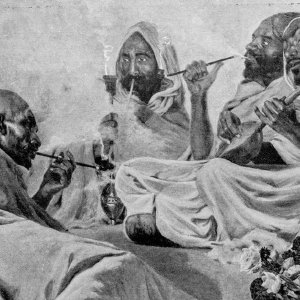
Hashish, or “hash,” as it is commonly known, is a substance traditionally made from the resin of the cannabis plant. It has a long history in Central and South Asia and the Middle East.
 ®