Restoring Maine to its Original Beauty and Dignity
on this page
Overview of the Drug Addiction Problem in Maine

Maine has a substantial enough problem that Cumberland County, where Portland is located, has been included in the New England High-Intensity Drug Trafficking Area.
Over the years, two serious problems in Maine have been diverted pharmaceutical drugs and marijuana. Cocaine also shows up in moderate quantities, usually brought in by passenger car or concealed in a tractor-trailer. In some areas, cocaine is then cooked into crack cocaine before being sold. In recent years, heroin has become a major drug of abuse in Maine as it is in the other New England states.
Drugs also come into Maine using all the channels successfully employed by traffickers everywhere: package delivery services, U.S. mail, concealment in seagoing cargo containers, couriers on public transportation such as airplanes, trains, buses and private boats that can anchor in any of Maine’s hundreds of secluded coves.
Street gangs that operate in major and midsize cities in every New England state are responsible for most of the retail-level distribution of trafficked substances. Along with gang drug dealing goes increased violent and property crimes.
Arrest Records in Maine Show Marijuana Grows and Diverted Pharmaceuticals in Small Towns
In many small towns across the landscape, Maine residents are being arrested for indoor grows of 50 to 300 plants, or for selling OxyContin, Percocet, Vicodin, Suboxone (used in addiction treatment), methadone, Xanax or other drugs. Bethel, Newry, Waldoboro, Biddeford, and Farmington have recently been the site of such arrests.
Maine Drug Enforcement agents have also arrested residents of other states who bring in drugs such as methamphetamine, heroin or cocaine from other regions, most commonly the Boston area. Most trafficking takes place along the I-95 corridor. The Canadian border also sees trafficking of pharmaceutical drugs being diverted from that nation’s supplies, or Ecstasy (MDMA), a drug commonly used in nightclubs or all-night raves.
Opiate-type Drugs Result in the Highest Number of Deaths
Based on figures from the Drug Abuse Warning Network from 2007, just three counties (Cumberland, Sagadahoc, and York) lost 55 people to drug deaths and an additional 8 to drug-related suicides that year. Nearly all of them were multi-drug deaths, and nearly all of them involved opiates or opioids such as methadone, OxyContin, heroin, morphine or Percocet. Alcohol accounted for seven of the deaths, all of them in combination with other drugs. Deaths involving opiates increased greatly between 2006 and 2007, rising from 32 to 49.
Maine Youth Involved in Many Arrests for Marijuana and a High Proportion of Addiction Treatment Admissions
In 2006, Maine saw more than 2000 arrests for possession of marijuana. More than 400 of these were juveniles. According to federal surveys, ten thousand Maine residents between the ages of 12 and 17 are current users of marijuana. They also account for more than one-quarter the number of people admitted to addiction treatment centers.
Alcohol abuse sends the highest number of people of any age to substance abuse treatment facilities, either alcohol alone or alcohol with a secondary drug. Right after alcohol comes opiates. While 7,272 entered drug addiction treatment for alcohol in 2008, 5,708 needed addiction treatment for heroin or one of the other opiate or opioid drugs.
Helping Good People Find Recovery
There are, amazingly enough, some people who feel that those who are addicted brought it on themselves. But no one wanted to be an addict. They might have just been following doctor’s orders or maybe they thought they could use drugs a few times with friends and not get into trouble. No one planned to become addicted and no one, despite what they might say, wants to continue to be an addict. It has been the job of Narconon for over fifty years to help these people find sobriety, recovery and their true natures again.
It is true that when a person is deeply addicted, he (or she) no longer acts like himself. He does not make choices like he did when he was sober. He has been putting his drug use before his own health, family and community. If he had not been overwhelmed by pain and intense cravings, it never would have been this way.
At Narconon centers across the United States and around the world, it’s possible to leave this addicted personality behind and become yourself again—honest and productive. This is what families hope and pray for each day, when someone they love is addicted.
The First Step Back to Health: Detoxification
This is not like the detoxes you might have heard about, where a person is supported while they come off the drugs they were taking. This one goes much deeper. Once through the Drug-Free Withdrawal, once starts on a healthy combination of time in a low-heat sauna, a strict regimen of nutritional supplements and moderate exercise have the effect of flushing old, stored drug toxins out of the body. These toxins could have been lodged for years, constantly affecting mood and thinking.
As these residues of past drug and alcohol use are washed away, a person’s thinking is clearer and brighter. His outlook improves. One person who finished this step said, “After going through the sauna, I kind of felt like I had before I had done any drugs. It was a pretty life-changing experience.” With this brightening of viewpoint, an individual is ready to start learning how to stay sober.
The Next Step: Teaching Lasting Life Skills
Now it’s time for a person to break the habits he developed just so he (or she) could survive. To start acting with consideration for others, he needs to come out of the hard shell addiction trapped him in. On the objectives, each person will go through a series of exercises that help him communicate with and regain control over his present time environment. Without a fresh new ability to perceive the present, he could stay trapped in trauma and fear from the past.
Each person then learns basic principles related to a productive, enjoyable life. The lessons include knowing who your safe friends and associates are, regaining your own self-respect, finding relief from the heavy guilt carried for so long and learning how to overcome problems and barriers. The lessons are studied and then applied to one’s own life to continue the healing. Lesson by lesson, a person comes out of the bad attitudes of the past and can once again embody his own true nature and personality.
Before going home, he will prepare a plan to use these lessons to rebuild his life once he gets home. Once again, his goals and his family are his priorities and this plan helps him restore relationships that were once devastated by his addiction.
Get Help Now
For Some Mainers, A Desperate Need for Drug and Alcohol Rehab
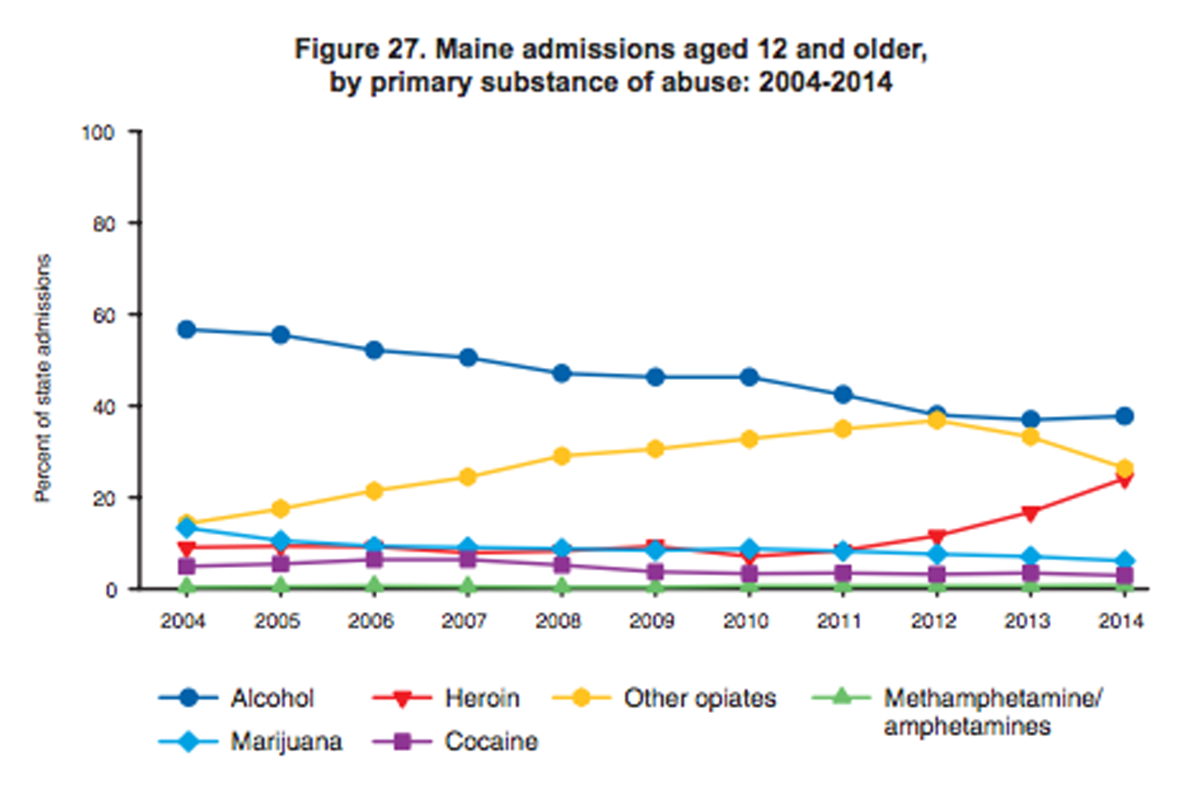
The graph of addiction treatment admissions quickly reveals the trends that began taking the lives of Mainers. At one time, alcohol sent the majority of Mainers to rehab but no longer. Painkillers began their steady and threatening climb in 2004. They only dropped from their peak in 2012 as heroin admissions began to increase.
Returning Maine to its Hardy, Independent Roots
Those who fall prey to drug addiction need substance abuse treatment centers that can help them learn to live completely drug-free. Unfortunately, this is often not the case in many of Maine’s drug rehabilitation centers. Too often, methadone or Suboxone as a long-term solution. A person may be diagnosed as suffering from depression and may be given a benzodiazepine such as Xanax, Klonopin or Ativan. But it is possible to recover from addiction without further drugs.
The Narconon drug and alcohol rehabilitation program supports a person with thoroughly researched nutritional therapy and gentle re-orientation exercises help make withdrawal symptoms tolerable, meaning substitute drugs are not needed. By then proceeding to restore one’s self-esteem and personal values, an addict can learn how to become a healthy person free from the need to abuse other drugs and can establish a new, productive life for himself or herself once again.
 ®
® ) on our articles for the most up-to-date and accurate information.