Relieving North Carolina’s Burden of Addiction
ON THIS PAGE

If you were talking to someone about North Carolina, you’d probably find that most people don’t associate this scenic state with high levels of drug abuse. It’s better known for its Outer Banks, the Great Smoky Mountains National Park and Blue Ridge Parkway, its fine universities and many mountain resorts. It might surprise people that North Carolina landed three spots on a list of the 15 Most Addicted Cities in the U.S.
This list was formulated by Castlight Health, a healthcare information company. The company used information on the number of prescriptions dispensed in each city and anonymous information on patients to determine how many were getting prescriptions from more than one doctor.
Their analysis revealed that in Jacksonville on the North Carolina coast, 8.2% of patients taking opioids were abusing their pills by taking more than recommended or using them in an irregular manner. For example, they might be injecting them instead of swallowing them.
In Hickory, an estimated 9.9% of patients with opioid prescriptions are abusing them and in Wilmington (which landed in the #1 spot on the list), 11.6% of patients were estimated to be misusing them. It was also estimated that 54% of the prescriptions filled in this city are abused.
Wilmington has the dual misfortunes of having a high gang population—which is often accompanied by high rates of drug trafficking—and of being located on Interstate 95, a major conduit for drugs moving north to major urban areas.

Other parts of the state may have it no better. In 2016, there were 82.5 pills of opioid painkillers prescribed for each man, woman, and child in Western North Carolina. The western part of this state lies in the Appalachian mountain range, an area that has long been associated with high levels of opioid dependence. Overcoming this problem that impacts every North Carolinian requires many actions, including the delivery of drug rehab that really works.
Early North Carolina Success Preventing Drug Deaths
In 2007, Wilkes County, North Carolina had the third-highest rate of overdose death rate in the country. They took action on seven different fronts to combat overprescribing, help those in pain find other solutions than opioids and build awareness in the community. By 2011, the overdose rate dropped 69%. The state continues to take action to reduce these deaths but the problem has obviously grown faster than state officials could fight it.

Fifteen of North Carolina’s counties participate in the Atlanta-Carolinas High-Intensity Drug Trafficking Area to improve coordination with other law enforcement agencies and obtain more funding to fight this problem. Most of the counties are tucked up next to Tennessee, are situated at the far western edge or surrounding the Tri-Cities.
When the wrong drugs are prescribed or when a young person tries a few drugs at a party or college, one’s whole life can be drawn down a dark, destructive path. But that can change. Narconon drug rehab centers and their staffs stand ready to help those in North Carolina leave drug abuse and addiction far behind.

Unbeknownst to and undesired by North Carolina residents, their state has gradually assumed the perfect characteristics for being inundated by drugs.
-
The state is seeing rapid population growth, particularly by ethnic populations, making North Carolina now the tenth most populous state in the nation. While ethnic populations are as law-abiding as any other group, a growing or existing ethnic population allows foreign drug traffickers to mingle unnoticed much more easily.
-
North Carolina possesses an abundance of transportation options, including the main Eastern Seaboard North-South route, I-95. An efficient web of national interstates and state highways criss-cross the state, augmented by airports, railroads and bus lines.
-
Besides these factors, it seems that any area experiencing growth and prosperity is a natural target for drug traffickers because where there is work, there are customers with money.
In the past few years, both Atlanta and the Raleigh metropolitan area have become second-tier drug distribution centers, staging areas for drugs traveling from the Southwest border to consumers along the East Coast or in the Northeast. This region augments the major drug distribution centers in New York, Chicago, and Southern California.
Cocaine is Biggest Threat but Other Drugs are in Ample Supply
Wherever there is an increase in the movement or distribution of illicit drugs, property and violent crime seem to follow. Most law enforcement authorities in North Carolina state that overall, cocaine constitutes their biggest threat, mostly powder cocaine but also crack cocaine. Crack cocaine, in addition to being highly addictive, also contributes to more violent crime and property crime than any other drug.
Domestically-grown marijuana along with imported, high-potency marijuana from Canada or commercial-grade marijuana from Mexico are available across the state. And even heroin, not usually present in any quantity in the Southern states, was reported on the increase by law enforcement in Durham. Between 2007 and 2008, the quantity of heroin seized in North Carolina increased 77 percent.
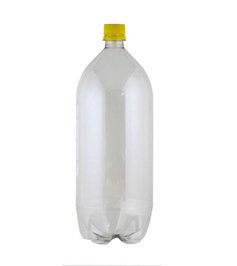
In most states, North Carolina included, methamphetamine lab seizures dropped steadily after a change in the laws made it harder to get precursor chemicals. In 2008, meth lab seizures were again on the rise after a new procedure was developed that required less pseudoephedrine and less equipment. Called the “Shake and Bake” method, it uses two-liter soda bottles rather than an array of pots, pans, and bowls to manufacture the methamphetamine.
Drought conditions in 2007 caused those growing marijuana on public lands to have to scale back their operations. That year, only 15,115 plants were eradicated. Growers bounced back the next year - more than 100,000 plants were found and destroyed.
While Mexican drug trafficking organizations are the main one bringing drugs into the area, they let other groups do the retail work. Mexican DTOs work with Jamaicans, Dominicans, African-American and American gangs. The last couple of years have also seen a rise in the presence of Hispanic gangs in the Raleigh area.
Controlled Prescription Drug Abuse Adds More Injury to the Area
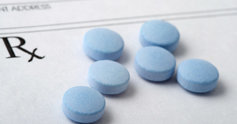
Doctor-shopping, unscrupulous pharmacy technicians or doctors, theft and prescription fraud led to widespread abuse of prescription drugs such as OxyContin, Percocet, Xanax, Valium and Adderall. In the western portion of the state, a higher number of high school students said that they had abused prescription drugs (25 percent) than in any other region of the state. One reason forwarded for this phenomenon was that possibly the higher number of over-65 residents in Western North Carolina caused there to be more analgesic drugs in circulation that could then be stolen by a family member, service person or burglar.
Alcohol Addiction Leads the Statistics for Substance Abuse Treatment
In all, nearly 40,000 people found drug recovery programs within the state of North Carolina in 2008. More than 15,000 of these admissions to rehab centers involved alcohol consumption that was out of control. Slightly more than half of them involved people who only had a problem with drinking; 6,400 involved alcohol consumption plus a secondary drug.
In second place was marijuana, which proved its power to addict with 8,616 people needing addiction treatment to stop using the drug.
Cocaine was in third place, with three times as many people needing help with crack cocaine as powder cocaine. In all, cocaine sent 7,274 people to drug programs in 2008.
Narconon Has a Program That Can Help
For more than fifty years, the innovative Narconon program has been helping save lives. From a single center in Los Angeles, there are now dozens located around the world in countries like Japan, Taiwan, Italy, Australia, and Colombia. In the United States, there are several choices for a person in North Carolina. The most convenient locations might be the ones in Florida or Louisiana. From Western North Carolina, a drive directly west would take a person to the large Narconon drug rehab center near McAlester, Oklahoma. There are also rehab centers in Louisiana, Florida, Colorado and California. In every center, the program offered is exactly the same. A series of manuals guides each client through the steps of the program and educational videos make learning the recovery principles faster and easier.
Detoxification and Social Education

When a person arrives at rehab, he (or she) is struggling with certain kinds of damage. Life looks dim and dull, he is saturated with guilt for all the harm and expense he’s caused others, he has little hope of coming back to life and being able to stay sober for the long term. Recovery must be approached one logical step at a time—with each step preparing him for success in the next step.
The first step of the Narconon program is begun once it has been deemed safe by the medical director for the individual to begin the drug-free withdrawal step of the Narconon program. In some cases, it is medically necessary for a person to taper off of certain substances, such as benzos or heavy alcohol use. In these cases, our Narconon centers work with medical detox facilities to safely assist the individual to the point where they can begin their path to a truly drug-free life.
After withdrawal, and the person is feeling better, deep, sauna-based post-acute detoxification is begun. It’s called the New Life Detoxification because that is what it gets a person ready for—a new life. What makes this detox special? It directly addresses the drug residues trapped deep in the person’s body that can remain in place for years, even if drug use stops. Normally, the body isn’t able to flush out these residues but that’s what the New Life Detoxification is designed for.
The combination of time in a low-heat sauna, a very specific regimen of nutritional supplements and moderate exercise draws out these residues so they can be sweated away in the sauna. Those finishing this step describe themselves as having brighter outlooks, more energy, and lower cravings.
Get Help Now
Fill out this form and a Narconon Consultant will contact you.
Please provide as much information as possible.
Recovering Clearer Perceptions
The next step is helping a person heal from all the trauma, pain and fear suffered during their addiction to drugs or alcohol. If he doesn’t learn how to leave all this anguish behind, he may never give himself a chance at a happy life. He may make all his current decisions based on his pain and fear in the past which is no way to live.
On the Objectives, each person goes through a series of exercises designed to gradually return fresher perceptions of one’s current world and to restore control of one’s actions, decisions, and even thoughts. This restoration prepares a person to learn the specific life skills needed to make the right choices to protect one’s sobriety after graduation.
The Life Skills
When challenging moments arise, each person needs to have the ability to steer his life in the right direction. That takes three kinds of skill:
- Knowing which persons will support one’s sobriety and which would be likely to lead one back into drug or alcohol abuse
- Understanding exactly how personal integrity is lost and how it can be recovered
- Having the ability to recognize and resolve problems at work or in relationships and one’s community.
Armed with these skills, and have already put them to use to repair his life, a Narconon graduate is prepared to go home and construct a new, sober, productive and enjoyable life.
Narconon Drug and Alcohol Rehabilitation Program Provides Help
To those who wish to break the pattern of drug use or drinking that is destroying their lives, Narconon provides a unique drug recovery program that works.
In Narconon, addicts in North Carolina can find the solution they need to drug or alcohol addiction. A holistic substance abuse treatment program takes those who are addicted through a thorough detoxification and reorientation exercises, and then into a life skills training regimen that enables people to leave the past behind and look forward to a bright new future. Graduates ordinarily restore family relationships, renew personal value systems and experience the relief of restored personal integrity. It all adds up to a new life without drugs.

 ®
® ) on our articles for the most up-to-date and accurate information.