History of Marijuana
ON THIS PAGE
When cannabis is used as a drug, it is called marijuana. When cannabis is used for cloth, paper or rope, it is called hemp. The growing methods for the two uses are different and so hemp normally has a very low quantity of the intoxicant THC.
Early Marijuana Use

2700 B.C.
Marijuana has been used as medicine and a way of achieving euphoria since ancient times. The first reference to its use is in a Chinese medical manual dating back to around 2700 B.C. Chinese legend states that its usefulness in treating rheumatism, gout, malaria and, oddly enough, absent-mindedness was documented by Chinese Emperor Shen Nung — known as the Father of Chinese Medicine.
Its use spread from China to Korea, India and then to Eastern Africa. In India, the plant was celebrated in one of the Sanskrit Vedic hymns as an herb that could “release us from anxiety.” Ancient doctors prescribed marijuana for pain relief but also advised against using it too much as it could cause the user to “see devils.”
1500 B.C.
An Egyptian papyrus from about 1500 B.C. makes mention of cannabis as a useful way to treat inflammation.
800 - 1000 A.D.
In the Arab world, references to hashish began to show up between 800 A.D. and 1000 A.D. The plant’s intoxicating effects began to be emphasized around this time. Muslims used marijuana recreationally since alcohol consumption was banned by the Koran but marijuana was not. Hindus in India revered the use of marijuana in a mildly intoxicating drink called bhang, saying that it cured a long list of ills, including problems with sunstroke, digestion and dysentery.
Marijuana History - America
1500s
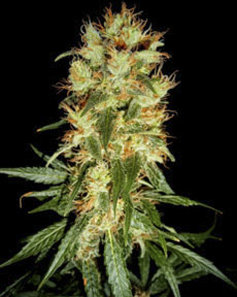
In the mid-1500s, the Spanish brought cannabis to the New World. They intended to grow this crop for hemp — strong fibers that could be used for clothes, bags and most especially for the rigging of ships. In Britain as well as Scandinavia, cannabis was an important crop because hemp ropes were durable despite wet, salty environments. More than 120,000 pounds of hemp ropes made from the fibers of cannabis plants were required to complete the rigging for the U.S.S. Constitution.
Also in the mid-1500s, African slaves transported to Brazil brought cannabis with them. They worked farms in Brazil and they were allowed to grow crops of marijuana to smoke.
As the American colonies were founded and grew, hemp was an important crop. As in Europe, clothes were often made out of hemp. Ropes made of hemp were needed for America’s commercial and defense ships. Hemp was also used to make oakum - twisted and tarred hemp fibers that were pounded in between the boards of a ship as waterproofing.
Every year, marijuana becomes more pervasive in the world. Download this booklet to get the facts.
DOWNLOAD NOW1800s
Enormous amounts of hemp were needed for one large sailing ship. A letter from 1797 documented the need for 50 tons of hemp for the USS Constitution.
When steamships began to replace sailing ships in the late 1800s, the need for hemp began to wane.
When fabric imports from England were cut off by America’s independence, cloth made from American hemp became far more important. The American colonists also had flax (linen) and wool but cotton had to come from the West Indies in the early days. Hemp, on the other hand, could be grown as far north as New England.
Both Thomas Jefferson and George Washington were hemp farmers, perhaps not successful ones. Betsy Ross’s prototype American flag was made from hemp fibers. The paper used for the Declaration of Independence was also made from hemp fibers.
There was more demand for hemp for clothing and paper than could be supplied in the early years. Much of the American hemp was not considered to be of high enough quality for shipbuilding. One of the reasons for this was the American method of processing the fibers was cheaper but resulted in a less durable product.
America was, therefore, importing high-quality hemp for ship rigging from Russia, as the English had done. Some hemp was imported from Italy, as well. Finally, comparison tests (using the USS Constitution) showed that American hemp was approximately as durable as Russian hemp. Documents from that time period discuss the challenge of getting American farmers to use the same processing methods as the Russians, which would result in an improved product. At this time, much of the hemp was grown in Kentucky or Virginia.

Durable clothing and other items continued to be made from hemp as Americans headed west. Early blue jeans worn by miners panning for gold were made of hemp and the fabric for covered wagons that crossed the prairies were also made from hemp fiber.
When cotton did begin to be farmed in America, it was so labor-intensive to process that it did not begin to be popular until the invention of the cotton gin. In the early 1800s, this machine spread in popularity, and so did cotton as a crop, replacing hemp to some degree.

By 1890, hemp had been replaced by cotton as a major cash crop in southern U.S. states, but hemp plants were not grown for their intoxicating properties. The level of intoxicant in this plant was very low. That began to change in 1910 when many people fled Mexico during that country’s revolution, arriving in America and bringing cannabis with them.
In the late 1800s, cannabis began to be used medicinally in America, as it had been used in other countries for thousands of years. There were no legal issues with using cannabis extracts in this way until well into the Twentieth Century.
Cannabis appeared as an ingredient in many patent medicines of the day, but it was a small percentage compared to the number containing opium or cocaine.
Medicines that contained cannabis extracts:
- Bromidia: Cannabis and chloral hydrate, a hypnotic for “restlessness.”
- From Squibb, Zinc phosphide and cannabis pills: They also contained strychnine and sodium arsenite (a form of arsenic); chocolate coated, for “neuralgia, sciatica, and spasmodic pains generally.”
- Da-Ka-Ta: Medication for corns on the feet.
- Dr. Macalister’s Cough Mixture: Cannabis, chloroform, and alcohol, for children and adults. “A safe and sure remedy.”
- Neuralgic pills: Main contents opium and cannabis.
- Chlorodyne: Morphine, cannabis, and nitroglycerin.
1900s


In the early Twentieth Century, cannabis began to attract attention from legislative bodies. Taxes and laws began to be enacted against the cultivation of industrial cannabis or the use of marijuana as an intoxicant or ingredient in medications.
One of the first laws was the Pure Food and Drug Act of 1906 that required that the contents of patent medicines be revealed. So the inclusion of morphine, alcohol, cocaine, heroin or cannabis had to be listed on the label, along with the quantity of the drug. It was not illegal to sell these medications over the counter—the law only required that the ingredients be revealed as many of these concoctions had previously kept their contents a secret.
By 1914, opium addiction was a widespread problem in the US, with an estimated one in every 400 people being addicted. Many women became addicted after being given opium as medication for menstrual or emotional problems. Many men had become addicted to another opiate, morphine, after the Civil War since this was the painkiller available for those who had become injured. The Harrison Narcotics Act of December 1914 imposed controls and taxes on the distribution of opiates or cocaine. This was one of the earliest curbs on the trafficking of addictive drugs in the US. It was shortly followed by the prohibition of alcohol production and sale, a ban that was repealed in 1933.
Various attempts to create federal bans on marijuana use followed these efforts but failed.
One by one, states began to pass their own laws against marijuana sales and consumption:
- 1915 California, Utah, Wyoming
- 1919 Texas
- 1923 Iowa, Nevada, Oregon, Washington, Arkansas
- 1927 Nebraska
Northern states like Maine, Vermont, Massachusetts and New York considered cannabis a narcotic along with opium, morphine, heroin, and codeine and had already outlawed its use without a doctor’s prescription.

Despite these controls, marijuana became more popular and use spread to the Southwestern US, New Orleans, and the New York area. The core users in each area were the ethnic groups who had moved into those areas in search of work or a good time: jazz musicians in New Orleans, Mexican laborers, and African-Americans who left the South to find jobs in the big city. The association of marijuana use with ethnic groups aggravated the antagonism of lawmakers who were generally affluent and Caucasian.
In the early 1930s, jazz and swing musicians published a number of songs that featured marijuana, such as Cab Calloway’s “That Funny Reefer Man” and Benny Goodman’s “Sweet Marihuana Brown.”
In 1930, the Federal Bureau of Narcotics was founded, with Harry Anslinger as its director. Anslinger undertook to outlaw the use of cannabis by spreading stories of murder and rampant insanity among those who used the drug. By 1937, he had succeeded in getting the Marijuana Tax Act passed which criminalized the use of cannabis unless proper taxes were paid. This law suppressed the use of hemp for cloth or rope.
However, during World War II, hemp was needed for parachutes, cordage and other military supplies. American farmers were given incentives to grow hemp for the war effort.
Between 1952 and 1956, two laws were passed that brought America into its current philosophy of outlawing addictive drugs and arresting drug users. The first was the Boggs Act and the second was the Narcotics Control Act of 1956. First-time possession of marijuana could receive a sentence of two to ten years in prison.
There may have been well-meaning intentions behind these laws but they failed to stop the growth in marijuana use that was just around the corner.

As American appetites for marijuana increased, the stakes became higher, traffickers defended their turf more intensely, and law enforcement budgets inflated to try to keep pace with the illicit cargoes.
The Colombians who were moving the largest proportion of marijuana into the US were also bringing in cocaine and heroin. Shipments got bigger and so did seizures. In 1990, a half million pounds of marijuana were seized in the US. By 2006, this quantity had increased to 2.5 million pounds.
The potency of marijuana averaged between 3% and 4.5% in the 1990s and then began to climb steadily for the next decade. By 2008, the overall average THC content would hit 8.8%. Sinsemilla averaged between 11% and 13% while commercial marijuana averaged 5% to 6%.
In 2008, the highest result from testing cannabis samples was 37% THC.
End of the 20th Century - Beginning of the 21st
Medical Marijuana Begins to be Approved, State by State

In 1996, California became the first state to approve the medical use of marijuana, despite federal bans remaining on the books. Initial approval was restricted to the treatment of AIDs, cancer, muscular spasticity, migraines, and several other disorders.
As other states began to launch legislation to approve medical use of marijuana, former presidents Ford, Carter, and Bush released statements urging voters to reject these initiatives because they circumvented the standard channels for approval of medications by the Food and Drug Administration. Cannabis as medicine, therefore, would skip tests that would prove its effectiveness and safety. Nevertheless, in November 1998, Alaska, Oregon and Washington passed legislation to legalize medical marijuana. Maine and Hawaii soon followed after, with many more states passing similar legislation in the next several years.
Despite state laws permitting medical use of marijuana, the federal government agencies and states would go head to head on the issue many times in the next decade.
Meanwhile, drug trafficking organizations continued to ship massive amounts of the drug into the US. By a few years into the new millennium, it was estimated that about 30 million pounds of marijuana were being trafficked in the US each year.
State by state, efforts continued to legalize the use of medical marijuana. In May 2012, Connecticut became the seventeenth state to legalize the use of medical marijuana.
Teens and Marijuana Use

While state and federal governments debated the merits or dangers of medical marijuana, an increasing number of teens began to abuse the drug. From a low of 33% in 1992, usage by high school seniors increased to 49% by 2001 and fluctuated between 42% and 45% through 2011.
Perhaps one of the most significant statistics related to teens and marijuana use is the measurement of how much risk teens think is associated with regular use of marijuana. In 1991, 82% of tenth graders felt that this was a risky activity. This number declined steadily until it reached 55% in 2011. A decreasing perception of risk is normally followed by increasing usage statistics.
By 2009, the National Survey on Drug Use and Health showed that 3.3 million youth (ages 12-17) were using marijuana recreationally. More than 800,000 showed characteristics of dependence or addiction.
Not surprisingly, the next year, 80% to 90% of American high school seniors said that the drug was “very easy” or “fairly easy” to obtain.
Effects of Increasing Marijuana Abuse
Despite the persistent arguments that marijuana is not addictive, this drug was responsible for 13% of treatment admissions in 1999. This number increased to 18% by 2009. This represents the number of people for whom marijuana was the primary or only drug they were using.
Here are some other facts about addiction treatment needs of young Americans in 2009:
- For both males and females, the peak age at admission to addiction treatment for marijuana was 15 to 17 years of age.
- Forty percent of marijuana addiction treatment admissions were under age 20.
- Seventy percent of all admissions for children 12 to 14 years of age were for marijuana.
- Seventy-two percent of all admissions for children 15 to 17 years of age were for marijuana.
Tests by the National Highway Traffic Safety Board found that marijuana use affected a driver’s ability to concentrate on driving, think and react quickly to changing driving conditions. One study showed that a person who used marijuana within the three hours before driving doubled their risk of a traffic accident.

A study published in 2012 from King’s College in London and Duke University found that those under 20 years of age who abused marijuana at least four days a week lost an average of eight IQ points and that these IQ points did not recover if they stopped using the drug. When individuals refrained from smoking marijuana until they turned twenty, they were not similarly affected.
When a person is thinking about using any drug - inhalant, prescription or illicit drug - it is vital to have an understanding of the effect on oneself and the larger influences that surround the drug. You are to be congratulated for finding out more about marijuana for your own sake and so you can help your friends.
Sources:
- http://druglibrary.org/schaffer/hemp/history/first12000/11.htm
- http://www.pbs.org/wgbh/pages/frontline/shows/dope/etc/cron.html
- http://www.druglibrary.org/schaffer/library/studies/nc/nc2_7.htm
- http://home.olemiss.edu/~suman/potancy%20paper%202010.pdf
- http://www.icsdp.org/publications#debate
- http://medicalmarijuana.procon.org/view.resource.php?resourceID=000143#1990
- http://www.pbs.org/wgbh/pages/frontline/shows/dope/etc/cron.html
- http://www.drugscience.org/Archive/bcr4/5Supply.html
- http://www.cnn.com/2009/HEALTH/05/14/marijuana.potency/index.html?_s=PM:HEALTH
- http://www.wired.com/images_blogs/wiredscience/files/UoMfSummary.pdf
- http://www.telegraph.co.uk/health/healthnews/9426205/Cannabis-smoking-permanently-lowers-IQ.html
- http://www.hempology.org/JD'S%20ARTICLES/NEWENG.html
- http://hempology.org/ALL%20HISTORY%20ARTICLES.HTML/1827;COMMISH.html
- http://hempology.org/ALL%20HISTORY%20ARTICLES.HTML/1899;SECRETARY.html
- http://www.pbs.org/wgbh/pages/frontline/shows/dope/etc/cron.html
